In a significant protest, many notable Jewish leaders, including Israel's president and the chief rabbi of the UK, chose to boycott an international conference on antisemitism held in Jerusalem. Their withdrawal stems from concerns over the attendance of far-right political figures from several European countries, such as France’s National Rally and Spain’s Vox party.
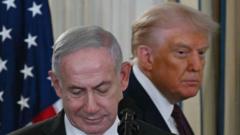
Israeli Prime Minister Benjamin Netanyahu, addressing those present, emphasized the threat antisemitism poses to free societies, drawing parallels to the complacency before the Nazi Holocaust. He stated, "Today, we issue a similar warning. The fate of free societies is tied to the willingness to fight the scourge of antisemitism," referencing ideas from a warning issued by his father in 1933.
However, the invitation of European far-right representatives has sparked backlash. UK antisemitism advisor Lord Mann rejected his invitation, asserting that learning from such figures is counterproductive. Chief Rabbi Ephraim Mirvis made a similar decision, expressing concern over the populist politicians' presence, while Israel's President Isaac Herzog opted not to attend, choosing instead to convene a separate meeting of Jewish leaders.
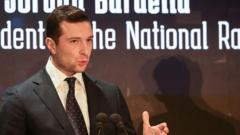
Amichai Chikli, Israel's Diaspora Affairs Minister and a member of Netanyahu's Likud party, organized the event and defended the inclusion of far-right politicians. He claimed they are unfairly targeted by critics who misrepresent Israel’s global standing. Among the controversial attendees was Jordan Bardella, president of France's National Rally, who acknowledged the historical implications of his invitation but did not directly address the party's controversial past. He asserted that under Marine Le Pen’s leadership, his party stands as "the best shield for the Jews of France."
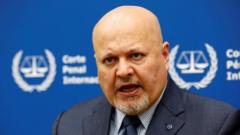
The conference also served as a platform to voice Israel's perception of external pressures, with discussions revolving around bias against Israel in international forums, the impact of radical Islam on antisemitism, and allegations of double standards related to the International Criminal Court's actions against Israeli leaders. The ICC's issuance of an arrest warrant for Netanyahu has intensified feelings of being unfairly targeted, with many in Israel attributing such actions to antisemitism.
Israeli Prime Minister Benjamin Netanyahu, addressing those present, emphasized the threat antisemitism poses to free societies, drawing parallels to the complacency before the Nazi Holocaust. He stated, "Today, we issue a similar warning. The fate of free societies is tied to the willingness to fight the scourge of antisemitism," referencing ideas from a warning issued by his father in 1933.
However, the invitation of European far-right representatives has sparked backlash. UK antisemitism advisor Lord Mann rejected his invitation, asserting that learning from such figures is counterproductive. Chief Rabbi Ephraim Mirvis made a similar decision, expressing concern over the populist politicians' presence, while Israel's President Isaac Herzog opted not to attend, choosing instead to convene a separate meeting of Jewish leaders.
Amichai Chikli, Israel's Diaspora Affairs Minister and a member of Netanyahu's Likud party, organized the event and defended the inclusion of far-right politicians. He claimed they are unfairly targeted by critics who misrepresent Israel’s global standing. Among the controversial attendees was Jordan Bardella, president of France's National Rally, who acknowledged the historical implications of his invitation but did not directly address the party's controversial past. He asserted that under Marine Le Pen’s leadership, his party stands as "the best shield for the Jews of France."
The conference also served as a platform to voice Israel's perception of external pressures, with discussions revolving around bias against Israel in international forums, the impact of radical Islam on antisemitism, and allegations of double standards related to the International Criminal Court's actions against Israeli leaders. The ICC's issuance of an arrest warrant for Netanyahu has intensified feelings of being unfairly targeted, with many in Israel attributing such actions to antisemitism.