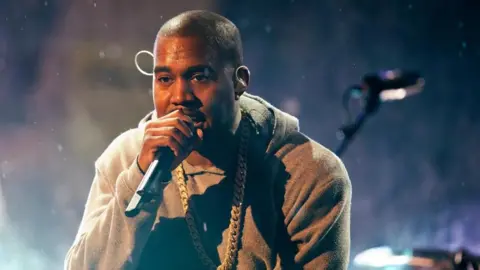
This summer's Wireless Festival has been cancelled after headliner Kanye West was blocked from coming to the UK.
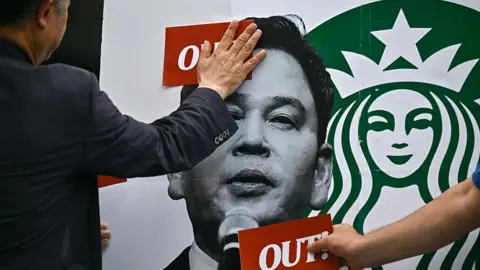
The government refused permission for West, now known as Ye, to travel to the UK after backlash to his planned set at the London festival this summer.
For the last several years, West has caused outrage for a string of antisemitic, racist and pro-Nazi comments.
In a statement, Wireless Festival said: The Home Office has withdrawn Ye's ETA, denying him entry into the United Kingdom. As a result, Wireless Festival is cancelled and refunds will be issued to all ticket holders.
It continued: As with every Wireless Festival, multiple stakeholders were consulted in advance of booking Ye and no concerns were highlighted at the time. Antisemitism in all its forms is abhorrent, and we recognise the real and personal impact these issues have had. As Ye said today, he acknowledges that words alone are not enough, and in spite of this still hopes to be given the opportunity to begin a conversation with the Jewish community in the UK.
Earlier on Tuesday, the Home Office told the BBC the rapper made an application to travel to the UK on Monday via an Electronic Travel Authorisation (ETA). It said the decision to refuse permission was made on the grounds that his presence would not be conducive to the public good.
West has been seeking a return to mainstream public view after apologising for his actions in a lengthy statement published in the Wall Street Journal in January. Just last week, he played two sold-out concerts in Los Angeles, telling the crowd, Tonight we're going to put all this behind us, ain't that right LA?
The rapper had said on Tuesday that he would be grateful to meet members of the Jewish community in the UK in person to listen after controversy over his booking.
However, following the cancellation, many voices in the community, including government officials, have expressed their views on why West's booking was initially a mistake, reflecting serious concerns over antisemitism.
The Community Security Trust (CST) called the government's decision a sensible outcome to what has been yet another bruising episode for British Jews, highlighting the broader societal responsibility to address and confront antisemitism.
Criticism also emerged regarding the festival's management and their decision to invite West, with opponents stating that tolerance for antisemitism should not be endorsed.
As the festival organizers navigate the aftermath and refund ticket holders, they face significant public scrutiny over their initial booking decision and the implications on community safety and values.