In brief
As US President Donald Trump has threatened to target Iranian infrastructure unless a deal is made, the US and Israeli military operations have resulted in significant damage to civilian facilities, including bridges, pharmaceutical plants, and educational establishments. Experts raise concerns about the legality of these strikes in the context of international law, assessing whether the attacks could be classified as war crimes due to their impact on civilian life.
President Donald Trump has pledged to target critical infrastructure across Iran unless the country reaches an 'acceptable' deal to end the ongoing conflict with the US and Israel. The ultimatum comes with a promise to bomb the nation 'back to the Stone Ages,' raising alarms about the humanitarian impact of such military operations.
Since the conflict escalated, a series of strikes have resulted in considerable damage to vital infrastructure, with reports confirming attacks on at least two steel plants, three bridges, and a pharmaceutical plant over the past weeks. Concerns have mounted as some US congressional members and UN officials argue that these military actions could amount to war crimes.
Impact on Civilian Infrastructure
The strikes have not only targeted military assets but have also hit civilian infrastructure, including schools and hospitals. Recently, US aircraft attacked a bridge under construction in Karaj, resulting in multiple casualties.
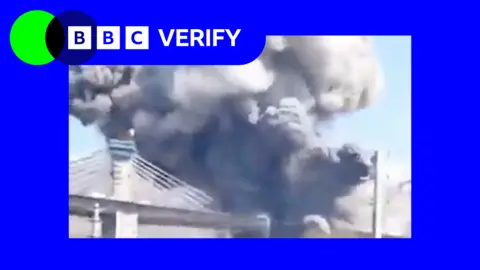
Visual evidence corroborated by BBC Verify showed significant destruction at the Isfahan Mobarakeh Steel Company, Iran's largest, following a strike that forced the suspension of all operations.
Israeli Prime Minister Benjamin Netanyahu claimed that the strikes have disrupted 70% of Iran's steel manufacturing capability, threatening to destabilize the Iranian economy significantly. Analysts like Arman Mahmoudian warn that dismantling vital production capacities could pose grave risks to Iran's GDP and economic health.
The Legal Controversy
Legal experts have questioned the validity of these strikes under international law, which allows military action against civilian sites only under strict conditions. High-profile figures, including UN authorities, have highlighted that attacking civilian infrastructure without ensuring minimal civilian harm constitutes a violation of international discussions regarding war ethics.
In response to these clarion calls for accountability, Trump has downplayed concerns, stating that the real threat lies in Iran's potential to develop nuclear capabilities, asserting that this is the true 'war crime.'
As hostilities unfold with increasing intensity, the global community watches closely, grappling with the implications of these military actions on both international stability and human rights.