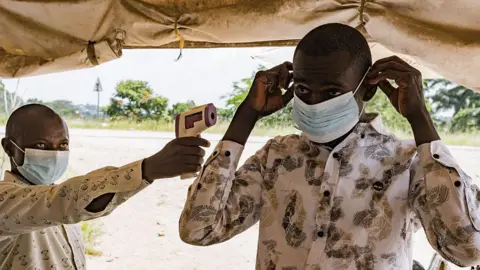
The World Health Organization (WHO) has announced that developing a vaccine for the current Ebola outbreak could take up to nine months. The outbreak, focusing on the Bundibugyo species, which has shown up rarely in the past decade, poses significant health risks as confirmed cases in the Democratic Republic of Congo (DRC) have reached 51, alongside 600 suspected cases and 139 suspected deaths.
WHO officials are working on two candidate vaccines, neither of which has entered clinical trials. The risk remains high in the DRC and its neighboring regions, while the global risk appears low at this stage. The outbreak was declared a public health emergency of international concern, however, not classified as a pandemic.
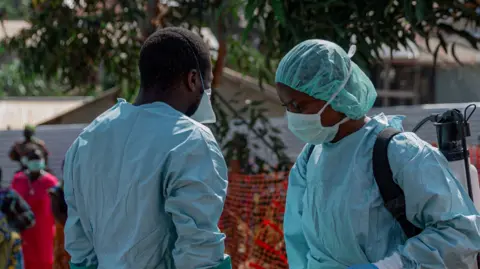
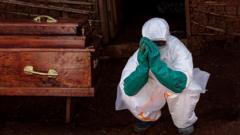
Local health workers report that facilities are overwhelmed with suspected cases, and while protective equipment is slowly arriving, the staff still lack adequate protection. Moreover, healthcare providers have faced fatalities due to the virus.
The UK government has committed up to £20 million towards supporting frontline health workers and improving infection control measures. Given the history of Ebola, initial symptoms can easily be mistaken for more common diseases like malaria and typhoid, further complicating diagnosis and response efforts.
As the outbreak unfolds, the international community's support and timely vaccine development will be crucial in managing this complex and dangerous situation.
WHO officials are working on two candidate vaccines, neither of which has entered clinical trials. The risk remains high in the DRC and its neighboring regions, while the global risk appears low at this stage. The outbreak was declared a public health emergency of international concern, however, not classified as a pandemic.
Local health workers report that facilities are overwhelmed with suspected cases, and while protective equipment is slowly arriving, the staff still lack adequate protection. Moreover, healthcare providers have faced fatalities due to the virus.
The UK government has committed up to £20 million towards supporting frontline health workers and improving infection control measures. Given the history of Ebola, initial symptoms can easily be mistaken for more common diseases like malaria and typhoid, further complicating diagnosis and response efforts.
As the outbreak unfolds, the international community's support and timely vaccine development will be crucial in managing this complex and dangerous situation.