In brief
A violent mob stormed Rwampara General Hospital near Bunia, burning Ebola isolation tents and throwing stones at medical staff after being denied burial rights for a local footballer believed to have died of Ebola. Police fired warning shots as tensions flared over community distrust in the virus, which authorities report has killed 139 in eastern DR Congo. The outbreak, caused by a rare Bundibugyo strain with no available vaccine, has spilled into Uganda with M23 rebels confirming a new case in South Kivu. Authorities warn of a 'public health emergency' while health workers face rising protests over mandatory safe burials.
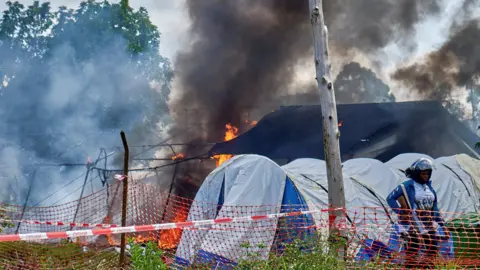
A violent mob stormed Rwampara General Hospital in eastern DR Congo on Friday, igniting Ebola treatment tents and hurling stones at medical staff after family members of a deceased footballer were denied burial rights. Local politician Luc Malembe Malembe witnessed the chaos: 'They started throwing projectiles at the hospital. They even set fire to tents that were being used as isolation wards,' he reported to the BBC. Police fired warning shots to disperse the crowd, while medical workers were placed under military protection following the incident.The unrest erupted after community members, led by the footballer's mother, were barred from burying their son—a popular local player who had been reported as an Ebola case. 'They believe it is the NGOs and hospitals creating this to make money,' Malembe explained, highlighting widespread disbelief in the virus. Many community members, particularly in remote areas, consider Ebola 'an invention by outsiders' that doesn't exist, despite WHO guidance requiring safe burials to prevent spread.Medical staff confirmed two tents were destroyed, including one housing a body awaiting burial. Alima, the charity operating the tents, stated all six patients receiving treatment were 'currently being cared for at the hospital' after the chaos. The incident underscores the critical challenge authorities face: stopping the virus while managing community resistance. As of Wednesday, the WHO reported 139 Ebola deaths in DR Congo from 600 suspected cases, though health minister Samuel Roger Kamba cited 159 fatalities.The outbreak, caused by the rare Bundibugyo strain, has now spread to Uganda with two confirmed cases and M23 rebels reporting its first instance in South Kivu province. Authorities in Uganda suspended all cross-border travel following the news. Meanwhile, DR Congo's national football team canceled its World Cup training camp in Kinshasa due to the pandemic. With no vaccine available for this strain—and scientists estimating it could take up to nine months to develop one—the crisis shows no signs of slowing. Health officials warn the situation remains 'a public health emergency of international concern' while medical teams struggle to balance epidemic containment with local community tensions.}