In brief
In a deep analysis of Iran's current sociopolitical scenario, Jeremy Bowen discusses the resilience of the Islamic regime amidst ongoing protests. Historical references illustrate how authoritarian regimes can collapse gradually, then suddenly. Despite intense protests and economic sanctions, the regime appears stable due to the loyalty of security forces, posing challenges for dissenters seeking change.
How does an authoritarian regime die? As Ernest Hemingway famously said about going broke – gradually then suddenly.
The protesters in Iran and their supporters abroad were hoping that the Islamic regime in Tehran was at the suddenly stage. The signs are, if it is dying, it is still at gradual.
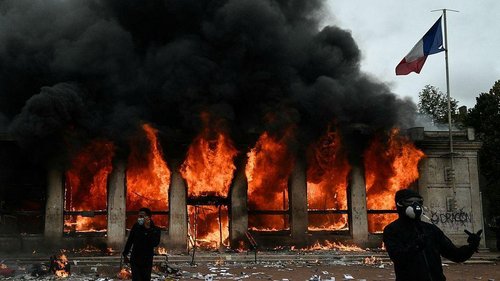
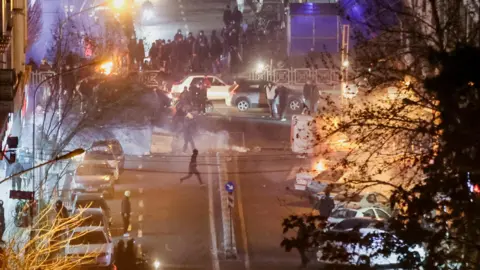
The last two weeks of unrest add up to a big crisis for the regime. Iranian anger and frustration have exploded into the streets before, but the latest explosion comes on top of all the military blows inflicted on Iran in the last two years by the US and Israel.
But more significant for hard-pressed Iranians struggling to feed their families has been the impact of sanctions.
In the latest blow for the Iranian economy, all the UN sanctions lifted under the now dead 2015 nuclear deal were reimposed by the UK, Germany and France in September. In 2025 food price inflation was more than 70%. The currency, the rial, reached a record low in December.
While the Iranian regime is under huge pressure, the evidence is that it's not about to die.
Crucially, the security forces remain loyal. Since the Islamic revolution in 1979 the Iranian authorities have spent time and money creating an elaborate and ruthless network of coercion and repression.
The IRGC has a significant role, leading the crackdown on protests. With an estimated 150,000 men under arms and a mix of power, money, and ideology, they are relentless defenders of the regime.
The situation indicates that although protests may escalate, the regime possesses the mechanisms for suppressing dissent effectively. Factors such as the lack of coherent leadership among protesters further complicate matters.
However, leaders in Tehran are still under pressure, both from within and outside. The combination of military repression and bellicose rhetoric from external powers like the US makes for a fraught atmosphere in which change is not impossible but remains distant.
Despite the challenges to the regime, observers acknowledge that a sudden fall, akin to other historical precedents, is not expected in the near term. Iranian opponents continue to hope for sustained pressure domestically and internationally, coupled with effective leadership to hasten the regime's decay.