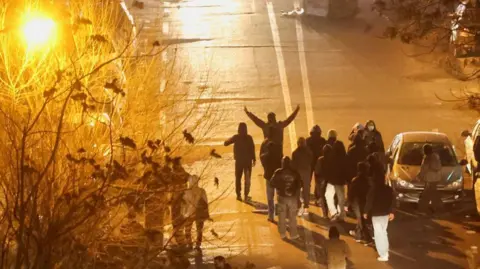
Iran's rulers are confronting their most serious challenge since their own 1979 revolution. They're now countering on an unprecedented scale - a ferocious security crackdown and near total internet shutdown has been unleashed on a scale unseen in previous crises.
Some of the streets once engulfed by a roar of anger against the regime are now starting to go silent.
On Friday it was extremely crowded - the crowd was unbelievable - and there was a lot of shooting. Then Saturday night it became much, much quieter, a resident of Tehran told BBC Persian.
You would have to have a death wish to go out now, one Iranian journalist reflected.
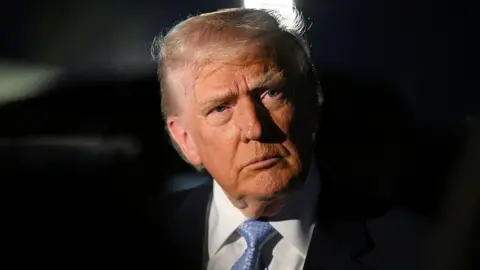
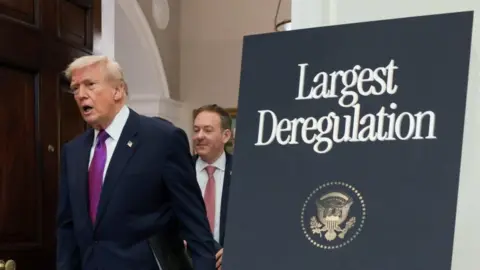
This time, an internal upheaval is also compounded by an external threat, with President Trump's repeated warnings of military action coming seven months after the US carried out strikes on key nuclear facilities during a 12-day war between Iran and Israel, which left the regime weakened.
Trump now says Tehran has called to go back to the negotiating table. However, the regime faces a complex dilemma as it grapples with demands that threaten its foundational principles.
Despite an influx of pressure, there is no sign Iran's leaders are changing course.
As the situation unfolds, pressure mounts on the Iranian government's ability to maintain control alongside the calls for political and economic reform resonating throughout the country.