Investigation Underway: Was the Minneapolis ICE Shooting Justified?
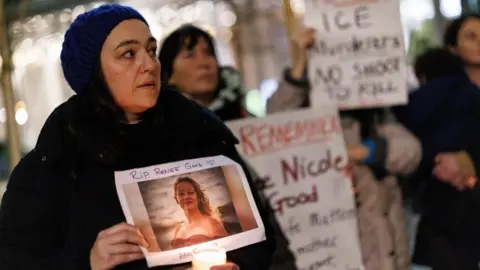
US investigators are grappling with difficult questions as they seek to determine whether the fatal shooting of a woman by a federal agent in Minneapolis last week was justified, amid significantly differing accounts from local and national officials that have sparked widespread protests.
Multiple videos have surfaced showing US Immigration and Customs Enforcement (ICE) agent Jonathan Ross firing at and killing 37-year-old Renee Good while she was in her burgundy Honda in a residential neighborhood.
In the aftermath, President Donald Trump and administration representatives labeled Good as a “domestic terrorist” attempting to run over an agent, while state authorities argue she was attempting to leave the scene. Former law enforcement officials suggest an initial review may find the shooting justifiable due to perceived threats, but express concern over the political discourse surrounding the incident.
Officials Cite Video Footage
Local and federal officials reference video evidence to bolster their respective claims about the event. The footage reportedly indicates that the ICE agents approached Good's vehicle, requested her to exit, and as the car began to move, Ross, who was filming the encounter, fired at her.
State officials assert the videos show Good was not posing a threat because she was turning away, while federal opinions maintain that she was attempting to drive into the officer, leaving him no choice but to use lethal force.
Amidst the politically charged nature of this case, former FBI agent Ken Gray emphasizes the need for an untainted investigation devoid of premature conclusions from all sides.
Justifying Deadly Force
In determining whether Ross's actions were justified, investigators will analyze the incident in context with the Department of Homeland Security's (DHS) policy on deadly force. Agents are authorized to use such force when facing an imminent threat of death or serious injury, but shooting at moving vehicles is strictly regulated.
Experts highlighted the complication presented by Ross’s past experiences as a law enforcement officer, where he was previously injured in similar circumstances. While some experts believe Ross may have had justification for his first shot, concerns arise about subsequent shots fired after the vehicle began to retreat.
Insiders note that ongoing political statements from Trump administration officials complicate the perception and potential outcomes of the investigation, raising questions of impartiality as the findings unfold.
Reconstructing the Scene
The investigative process will also involve physical and digital reconstructions of the shooting scene along with witness statements and background checks of both Good and Ross to assess the complete scenario surrounding the incident.
Despite Minnesota officials expressing doubts about the federal probe’s impartiality, they aim to conduct their own review of the events, combined with a lawsuit against the federal government concerning ICE's actions in the state.
A Jurisdiction Battle
Although this incident is under federal jurisdiction, concerns linger regarding the promptness of public endorsements by officials supporting Ross's actions before gathering all evidence. Such early declarations may affect the integrity of the inquiry, further complicating public trust and perceptions regarding the investigation.