In brief
In Kolkata, politicians are using fish as a powerful symbol in their election campaigns, reflecting cultural identity and the significance of fish in Bengali cuisine. This strategy aims to counter the perception of the BJP as pro-vegetarian, reinforcing local dietary customs as pivotal in the political landscape.
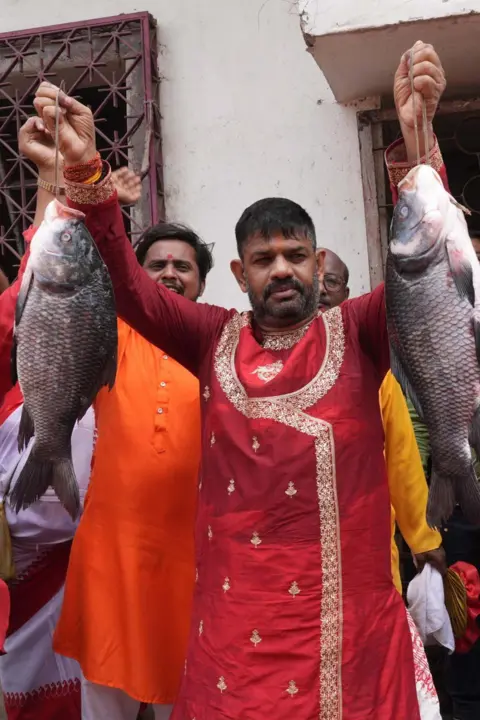
On a sticky morning in Kolkata, Koustav Bagchi, a BJP candidate for the upcoming West Bengal assembly elections, campaigns door-to-door with a fish in hand. This unusual approach serves as a visual cue, underscoring his identity as a local. Several kilometers away, fellow BJP candidate Rakesh Singh employs similar tactics, showcasing fish to connect with the electorate in a region where fish is more than just food; it symbolizes identity and tradition. In a culturally rich state like West Bengal, where approximately 65.7% of the population consumes fish weekly, the act of brandishing fish has transformed into a form of political theatre as candidates seek to strike at the emotional core of their constituents.The ruling Trinamool Congress, led by Chief Minister Mamata Banerjee, warns the electorate that the BJP's ideology threatens their way of life. Banerjee has passionately declared, 'The BJP will not allow you to eat fish, meat, or eggs,' framing fish consumption as integral to Bengal's cultural heritage.This politicization of a common food item highlights the broader socio-political dynamics at play. While the BJP has challenged these assertions, calling them untruths, they recognize the potency of fish as a cultural symbol. Prime Minister Narendra Modi and other leaders have also highlighted fish as a topic of governance, critiquing the Trinamool Congress's record on local fish production.As the campaign unfolds, fish has emerged as a focal point in discussions around identity, culture, and politics, revealing how deeply intertwined these aspects are within the fabric of Bengal’s electoral landscape.