Just seven days after he made the fateful decision to launch his coup against the elected government of Aung San Suu Kyi on February 1, 2021, General Min Aung Hlaing made a promise; to hold elections and return to civilian rule within a year. It has taken him five years to fulfill that promise. Today, the newly-elected parliament chose him to be the next president. Min Aung Hlaing has already stepped down as armed forces commander, as required by the constitution before he can take the post of president. Despite this transition, analysts emphasize that this is civilian rule in name only.
The parliament, sitting for the first time since the coup, is filled with his loyalists. With the armed forces guaranteed one quarter of the seats, and the military's own party, the USDP, winning nearly 80% of the remaining seats in an election which was tilted heavily in its favor, this was a preordained outcome—more of a coronation than an election. Military men are also likely to dominate the new government. Min Aung Hlaing has ensured that a staunch ally, General Ye Win Oo, a hardliner with a reputation for brutality, replaces him at the head of the armed forces. He has also created a new consultative council, which will exercise paramount authority over civilian and military affairs, ensuring he maintains power.
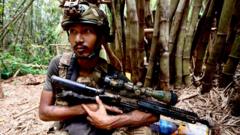
For many in Myanmar, the situation remains dire. Young activists express hopelessness as the brutality of state forces continues. The international community is alarmed by the ongoing conflict, which has displaced millions and resulted in significant humanitarian crises. Despite the elections, the National Unity Government representing the overthrown administration insists on continuing its fight against military rule, and a path to peace seems increasingly narrow amidst escalating violence and oppression.
The parliament, sitting for the first time since the coup, is filled with his loyalists. With the armed forces guaranteed one quarter of the seats, and the military's own party, the USDP, winning nearly 80% of the remaining seats in an election which was tilted heavily in its favor, this was a preordained outcome—more of a coronation than an election. Military men are also likely to dominate the new government. Min Aung Hlaing has ensured that a staunch ally, General Ye Win Oo, a hardliner with a reputation for brutality, replaces him at the head of the armed forces. He has also created a new consultative council, which will exercise paramount authority over civilian and military affairs, ensuring he maintains power.
For many in Myanmar, the situation remains dire. Young activists express hopelessness as the brutality of state forces continues. The international community is alarmed by the ongoing conflict, which has displaced millions and resulted in significant humanitarian crises. Despite the elections, the National Unity Government representing the overthrown administration insists on continuing its fight against military rule, and a path to peace seems increasingly narrow amidst escalating violence and oppression.