In brief
In an effort to enhance women's participation in politics, India is moving to amend its constitution to reserve a third of parliamentary seats for women. This initiative, however, is entangled in a wider debate over the redrawing of electoral boundaries based on population data from 2011, raising concerns among opposition parties about the implications for representation and fairness.
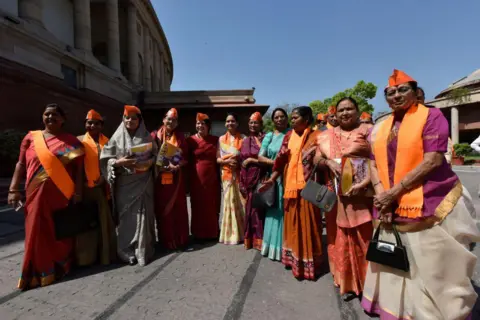
India is preparing for a once-in-a-generation redraw of its political map, driven by what the government describes as a necessary push to reserve one-third of seats for women in parliament and state assemblies. The government plans to introduce a constitutional amendment backed by a special three-day session, further changing the electoral landscape. Currently, women account for only about 14% of the 543 MPs in the lower house, and this reform aims to elevate that figure to nearly one-third, aligning India with global gender representation norms. However, this rollout coincides with a contentious population-based redrawing of constituencies, based on the 2011 census, potentially expanding the lower house from 543 to around 850 seats. Opposition parties have accused the government of hasty reforms during an election season, fearing that this correlation could undermine actual representation. Critics argue that while they support women’s reservation, tying it to constituency redistricting could result in uneven political influence, particularly punishing states with slower population growth like those in the south, which economically outperform other regions. The impending legislation, known as the Nari Shakti Vandan Adhiniyam, is seen by Prime Minister Modi as a historic leap for women's empowerment, yet amid these oscillating political dynamics, significant questions remain about the methods and criteria governing the distribution of these newly allocated seats.