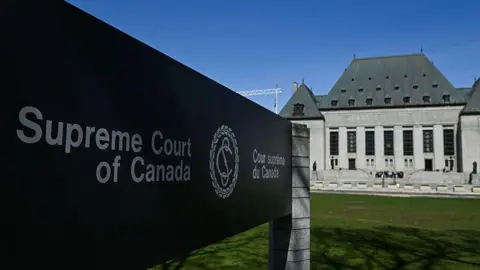
WASHINGTON (AP) — The Supreme Court grappled Tuesday with whether the Trump administration should be able to revive an immigration policy that has been used to turn back migrants seeking asylum at the U.S.-Mexico border.
Some conservative justices seemed receptive to the Justice Department’s push to overturn a lower-court ruling against the practice known as metering. Immigration authorities limited the number of people who could apply for asylum, saying it was necessary to handle an increase at the border.
Advocates say the policy created a humanitarian crisis during President Donald Trump’s first term as people who were turned away settled in makeshift camps in Mexico as they waited for a chance to seek asylum.
The administration, though, argues that metering remains a 'critical tool' used under administrations from both parties and should be available if necessary in the future.
While some justices seemed open to that argument, others raised questions about whether the policy would allow people who entered the country illegally to apply for asylum while new arrivals seeking legal entry at the border could be blocked.
Justice Brett Kavanaugh questioned the rationale behind allowing individuals who unlawfully enter the U.S. to be prioritized in the asylum process. Meanwhile, the Trump administration’s attorney maintained that those turned away could seek asylum later, likening it to a capacity limitation at a service point.
The legal dispute centers on the interpretation of the word 'arrive,' with federal law requiring that migrants who arrive in the U.S. can apply for asylum based on a fear of persecution in their home countries. The Justice Department argues that this applies only to those physically in the U.S., while immigration lawyers contend it should extend to those at border entry points.
The case follows a ruling from U.S. District Judge Cynthia Bashant, who found metering violated migrants' constitutional rights and a federal law mandating a screening process for asylum seekers.
As discussions continue in the Supreme Court, the potential reinstatement of metering could significantly affect how nearby refugees pursue asylum in the U.S.