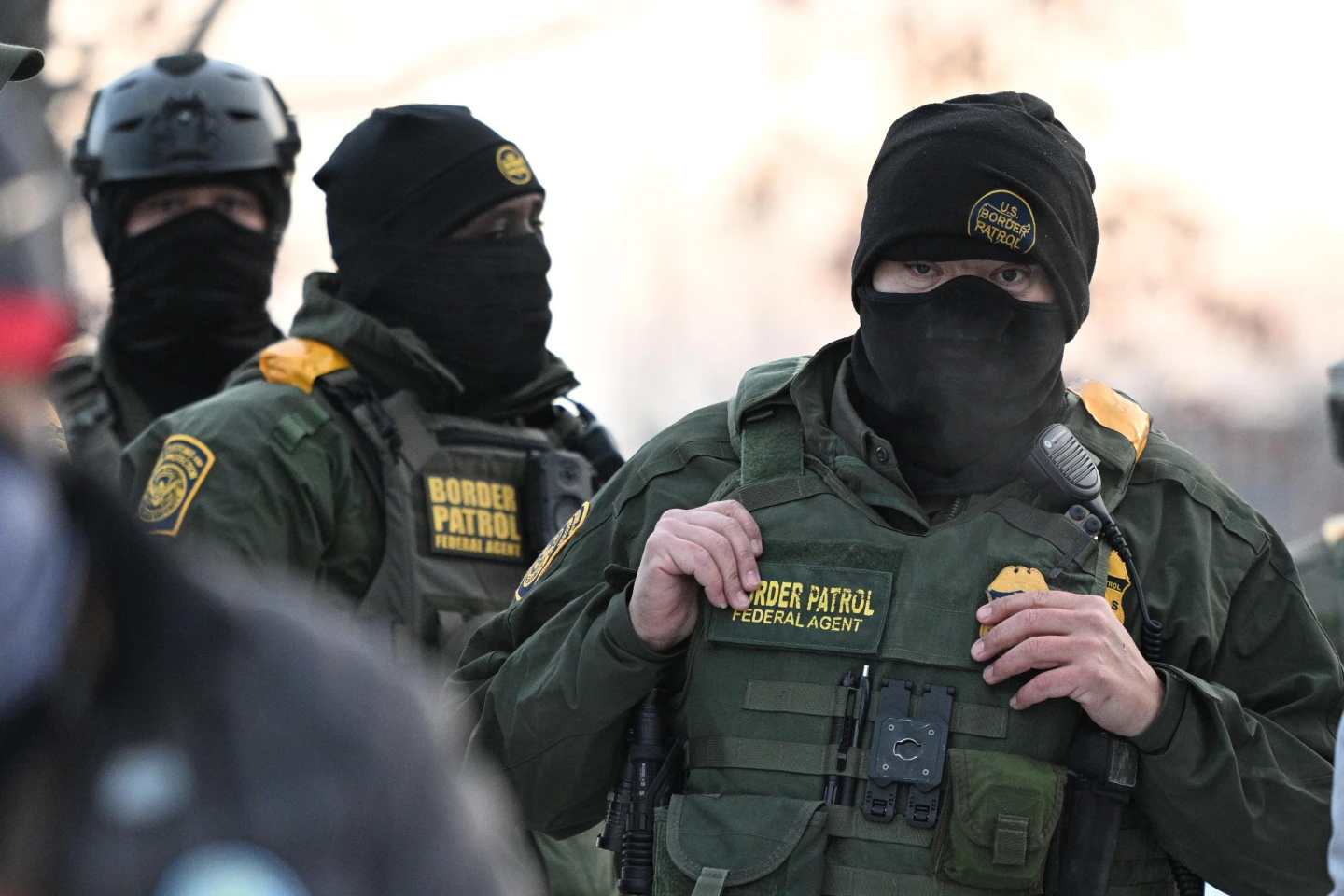
Proposals to prohibit federal immigration agents from masking their faces have gained new life in several states, significantly influenced by a recent court ruling that blocked the nation's first such law in California. Following the suspension of California's mask ban, Washington state is poised to sign a law that limits facial coverings on law enforcement officers, indicating a potential ripple effect across the nation.
In addition to Washington, similar anti-masking bills have gained approval in Oregon and Virginia, and preliminary discussions are underway in states like Hawaii, Maryland, and Vermont. This movement is seen as a counteraction against immigration enforcement tactics that have allowed federal agents, sometimes masked, to detain thousands for potential deportation, raising alarms around accountability and excessive force.
The Department of Homeland Security has condemned the new Washington state measure as irresponsible, reckless, and dangerous, stating it would not comply with any such law. Legal experts note that the constitutionality of bans on masking is ambiguous; a federal judge previously ruled that California's ban unfairly discriminated against federal law enforcement, opening the door for new state initiatives.
Washington's legislative measure restricts facial coverings for all law enforcement personnel during public interactions, except under specific circumstances such as undercover operations. The recent legislative activity reflects a significant moment in the ongoing conversation surrounding police transparency and the public's right to know the identities of law enforcement officers.
Supporters argue that masking creates intimidation and obstructs the trust vital for community policing. Meanwhile, opponents express concerns that such restrictions could endanger officers during confrontational encounters with protesters who may be allowed to mask their identities under current laws.
As this issue continues to unfold, it also raises questions about existing laws in various states regarding public masking, with some states already implementing regulations against the public wearing masks to conceal identities during unlawful activities.