President Lee Jae‑Myung of South Korea has called for the first formal talks with its northern neighbour to end the Korean War, which, though officially frozen since an armistice in 1953, remains a source of hostility.
Lee outlined a “multi‑layered security system” aimed at reducing flare‑ups along the Demilitarised Zone (DMZ). He also offered to discuss concrete measures to stifle North Korea’s missile developments and nuclear ambitions.
North Korea’s recent ballistic‑missile tests—designed to carry nuclear warheads—have been perceived near Seoul and by Japan as intimidation. The deterrent posture of Pyongyang compounds the tensions that persist along the DMZ.
The armistice signed in 1953 technically froze the war, but decades of skirmishes, provocations and exchanges of propaganda balloons have kept the peninsula on edge.
After taking office last year, President Lee has been working to improve relations with North Korea and its ally China, motivated by the negative trajectory that unfolded during his predecessor Yoon Suk‑Yeol’s tenure.
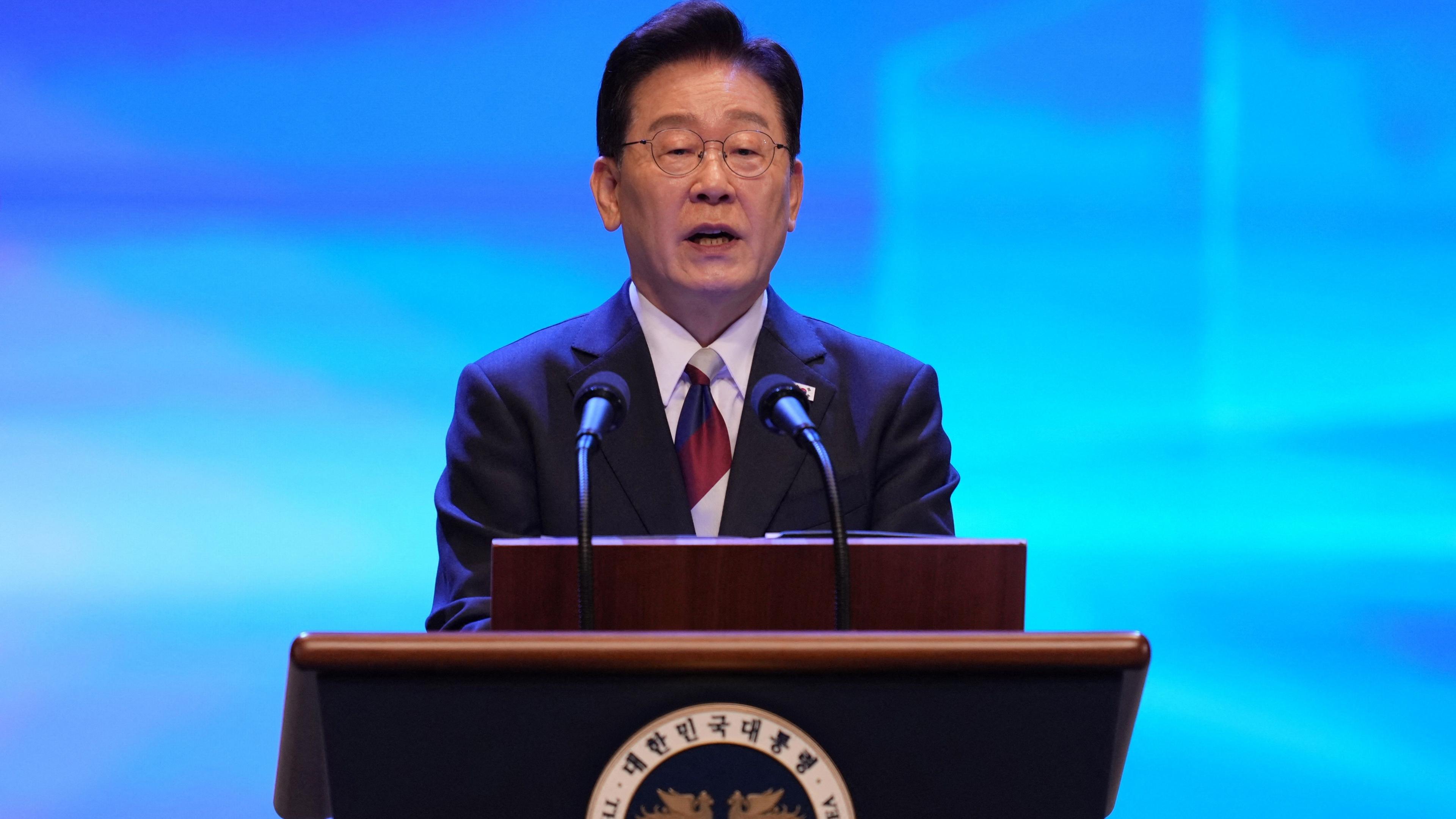
Speaking at a Liberation Day ceremony—commemorating the peninsula’s liberation from Japanese rule—Lee urged the parties to put down mutual threats and to open a dialogue to formally end the long‑running war.
He added that “the two nations should sit face‑to‑face for peaceful coexistence and mutual growth,” and that such a forum could also explore ways to halt North Korea’s advancing nuclear capabilities.
North Korea declared itself a nuclear power in 2022 and has stated it will never abandon its arsenal, which experts estimate includes dozens of warheads. President Lee previously noted that Pyongyang was producing 15‑20 new warheads a year, and he expressed willingness to support a deal to freeze that production.
The South is still waiting for a response from the North. North Korea’s state news agency covered Kim Jong Un’s own Liberation Day celebrations with wreaths and guard of honour, but no comment on the offer has been made.
Pyongyang has historically rebuffed similar South Korean overtures, criticizing foreign military drills and disputed arrangements such as a US–South Korea plan to build nuclear‑powered submarines for the South.
In the same month, North Korea tested another ballistic missile, its 11th such attempt of the year, just days before a scheduled US‑South Korea joint military exercise, underscoring the ongoing risk of flashpoints along the DMZ.