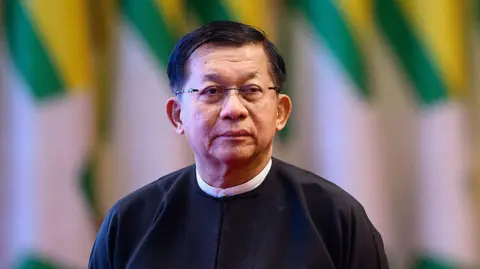
Myanmar's military chief Min Aung Hlaing has been nominated for the presidency as parliament convened, following a general election from which the primary opposition parties were excluded.
Min Aung Hlaing is widely expected to be elected since he is nominated alongside two loyalists unlikely to challenge him. His leadership is controversial; many Western nations have sanctioned him for leading a military coup five years ago.
The coup resulted in a civil war that has led to thousands of casualties and millions displaced, with many regions of the country under the control of armed resistance groups.
The junta touted the recent elections as a step towards peace, yet they were largely viewed as invalid due to the significant exclusion of popular parties and civil war conditions barring voter participation.
Approximately 90% of the new parliament is aligned with Hlaing, comprising either military personnel guaranteed a quarter of the seats or candidates affiliated with the military's political party. Debates over presidential selection are ongoing, but it's anticipated that Hlaing's election is a mere formality.
Hlaing has long sought the presidency, emphasizing its importance following dismal results from previous military elections. However, constitutional stipulations require him to relinquish control of the armed forces should he be elected, raising concerns over potential dissent within military ranks.
His intentions to establish a new consultative council suggest efforts to maintain influence over both military and civilian domains despite a possible shift in formal power. Observers predict that the incoming administration will resemble an extended version of the current military junta, sustaining the existing violent suppression of opposition.