In brief
A recent study highlights the connection between climate change and intensified drought conditions, attributing the phenomenon to increased atmospheric thirst driven by rising global temperatures.
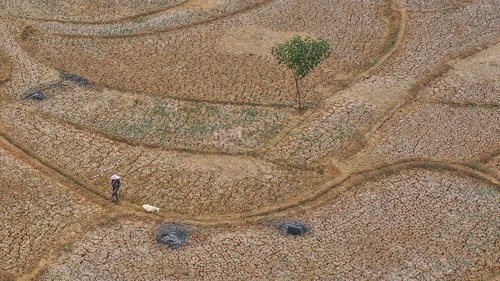
In an illuminating study published in the journal Nature, researchers reveal how rising global temperatures are leading to intensified droughts, a situation exacerbated by the concept of "atmospheric thirst." This term explains the phenomenon where a warmer climate leads to greater evaporation rates, creating an imbalance between water supply and demand, ultimately resulting in more frequent and severe droughts.Dr. Solomon Gebrechorkos, a hydroclimatologist at the University of Oxford, states that traditional models failed to capture the complexity of water dynamics, as they often relied solely on precipitation data. “You can’t just look at income without considering expenses,” he said, emphasizing the need for a more comprehensive approach in understanding drought conditions.Across regions such as the Great Plains and the western United States, farmers are already feeling the impact. Many are employing outdated irrigation systems that cannot meet the growing water demands of crops in increasing heat. Agricultural hydrologist Meetpal Kukal highlights that when the irrigation cycle completes, soil often remains dry due to rapid evaporation. As atmospheric conditions continue to evolve, further research into these challenges will be essential for developing solutions that allow agriculture to adapt to a drier reality. The implications of this study are vast, pointing toward a future where efficient water management becomes more crucial than ever to combat the effects of climate change on agriculture and the environment.