Understanding the SAVE America Act and Its Voter ID Mandate
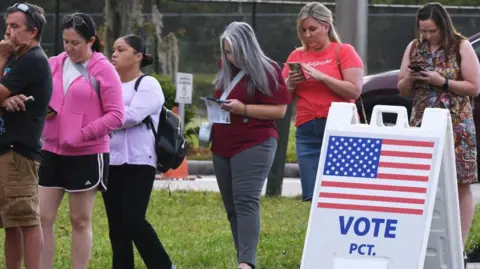
The US House of Representatives recently passed legislation that introduces new requirements for voter registration as midterm elections approach. The Safeguard American Voter Eligibility, or SAVE America Act, mandates that individuals provide proof of citizenship, such as a valid US passport or birth certificate, when registering to vote.
The legislation has generated significant concern among various groups, particularly regarding the impact on married individuals who may have changed their names and hence lack corresponding identification documentation. While Democrats argue that the act disenfranchises voters, Republicans assert that such measures are crucial to prevent voter fraud.
The proposed bill is not without its critics, as an estimated 21 million Americans do not possess ready access to the necessary citizenship documentation, and 2.6 million lack any form of government-issued photo ID. A Pew Research Center poll indicated a relatively high level of support for voter ID requirements, with 83% of respondents favoring the addition of such measures.
In addition to these requirements, election officials who register voters without verifying citizenship may face criminal penalties under the new law. Despite its passage in the House by a narrow margin of 218-213 votes, the SAVE Act faces an uncertain future in the Senate, with majority leader John Thune acknowledging a lack of the necessary support for a successful outcome.
As discussions around this legislation rage on, it highlights the ongoing national conversation about voting rights, accessibility, and the integrity of elections.