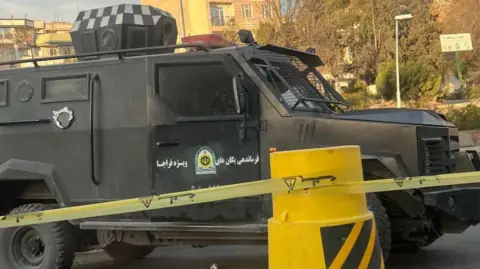
In a striking turn of events this week in Russia, transport minister Roman Starovoit was found dead just hours after being dismissed by President Vladimir Putin. His body was discovered in a park near Moscow with a gunshot wound to the head, and a pistol reportedly found at the scene. Authorities are currently investigating the incident and have suggested it may have been a suicide.
The tabloid Moskovsky Komsomolets expressed an overwhelming sense of disbelief, stating that Starovoit's death following such a quick dismissal is an "almost unique occurrence in Russian history." The last known instance of a government minister committing suicide occurred over thirty years ago during the period surrounding the Soviet Union's dissolution.
The Kremlin has remained somewhat tight-lipped about the incident, with Putin's spokesman Dmitry Peskov acknowledging the shock felt across Russia in a conference call, while emphasizing that the investigation must run its course to uncover the truth.
Media speculation has surged, drawing connections between Starovoit's death and the tumultuous political dynamics in the Kursk region, where he served as governor before his ministerial appointment. Under his leadership, funds were allocated for border fortifications that failed against Ukrainian advances, leading to his potential involvement in a major fraud case concerning the project's execution.
Political analysts argue that if fear of prosecution drove Starovoit to take such drastic action, it raises critical concerns regarding the state of governance in Russia. Nina Khrushcheva, a professor of International Affairs, equated Starovoit's situation to Stalin-era policies, suggesting he might have seen no viable exit from his predicament.
Despite the significant implications Starovoit's death holds for the current political elite, coverage on state-run media has been minimal. The main news broadcast on Russia-1 quickly shifted focus to the appointment of a new acting transport minister, only briefly reflecting on Starovoit's death in a mere 18 seconds on air.
This grim chapter in Russia's political narrative serves as a stark reminder for officials navigating a perilous landscape. Khrushcheva noted, "Unlike before, when you could ascend the political ladder, today's trajectory appears fraught with risks, culminating in potential peril as seen with Starovoit's fate." The stark reality facing political figures in Russia is one not only of diminished opportunities but potentially, as evidenced by this tragedy, an existential threat.