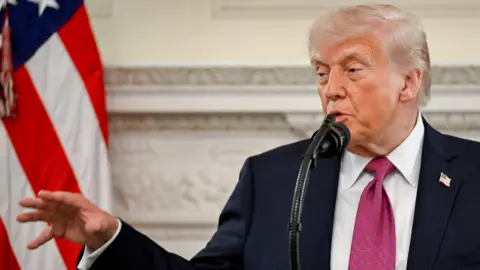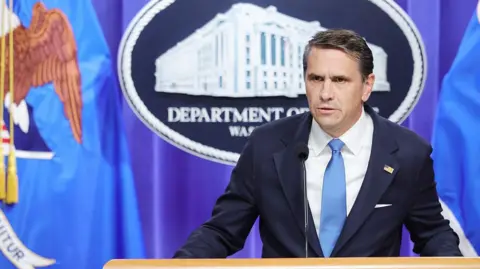
President Donald Trump's push to acquire Greenland has sparked a backlash from Republicans in Congress, as lawmakers voice growing concern about US military interventions overseas. However, it remains unclear if enough Republicans are willing to align with Democrats to block a takeover of the island territory and whether Trump would bow to pressure from Congress, or act unilaterally, as he has during his current term.
The focus on Greenland has morphed into a broader conversation about the Trump administration's use of military action and diplomatic pressure to project power, notably in regions like Venezuela and Iran. Traditionally, Republicans have backed Trump's foreign policy, but an increasing number are siding with Democrats who insist a Greenland acquisition could violate both US and international law.
Recent statements from Republican leaders indicate a waning interest in the US purchasing or militarily seizing Greenland, with concerns that tariffs Trump proposed against nations not supporting this acquisition could damage relationships with allies. A growing bipartisan effort seeks to prohibit military actions without Congress's approval in places like Greenland.
While the Trump administration argues that acquiring Greenland is vital for national security, lawmakers emphasize respect for its sovereignty as crucial. Trump's path to acquiring the territory remains complex, requiring Congressional funding approval, yet with concerns over excessive executive power being used for such ambitions, many wonder about the democratic checks in this scenario.
As debates unfold, both Congress and the President face significant challenges regarding international relations and the future of military involvement ashore. The handle on the Greenland matter could redefine the dynamics in US foreign policy and domestic governance.
The focus on Greenland has morphed into a broader conversation about the Trump administration's use of military action and diplomatic pressure to project power, notably in regions like Venezuela and Iran. Traditionally, Republicans have backed Trump's foreign policy, but an increasing number are siding with Democrats who insist a Greenland acquisition could violate both US and international law.
Recent statements from Republican leaders indicate a waning interest in the US purchasing or militarily seizing Greenland, with concerns that tariffs Trump proposed against nations not supporting this acquisition could damage relationships with allies. A growing bipartisan effort seeks to prohibit military actions without Congress's approval in places like Greenland.
While the Trump administration argues that acquiring Greenland is vital for national security, lawmakers emphasize respect for its sovereignty as crucial. Trump's path to acquiring the territory remains complex, requiring Congressional funding approval, yet with concerns over excessive executive power being used for such ambitions, many wonder about the democratic checks in this scenario.
As debates unfold, both Congress and the President face significant challenges regarding international relations and the future of military involvement ashore. The handle on the Greenland matter could redefine the dynamics in US foreign policy and domestic governance.