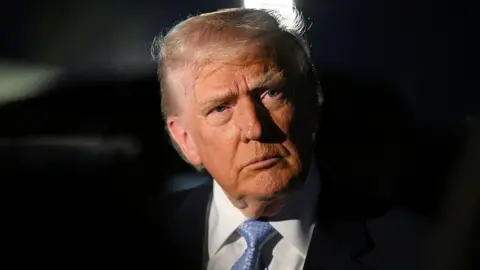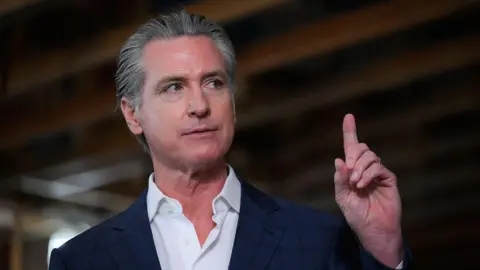
Donald Trump has stated that he believes people with learning disabilities should not be president, as he renewed his taunts at California Governor Gavin Newsom over his dyslexia. Trump characterized Newsom, a potential Democratic challenger for the presidency, as dumb, and made fun of the governor's struggles with reading and spelling, which led Newsom to label him as a brain-dead moron.
The National Center for Learning Disabilities expressed deep concern over Trump's remarks. Dyslexia, which disrupts how the brain processes written language, is a condition affecting approximately one in five Americans.
In response to Trump's derogatory comments, Newsom took to social media, criticizing Trump's lack of understanding regarding learning disabilities. The governor stated, I know that's hard for a brain-dead moron who bombs children and protects pedophiles to understand.
This exchange has sparked a wider conversation about the capability of individuals with learning disabilities to serve in leadership roles. Jackie Rodriguez, the executive director of the National Center for Learning Disabilities, emphasized that dyslexia does not impede one's intelligence or leadership abilities, noting that many past U.S. presidents may also have had dyslexia. The dialogue continues to challenge societal attitudes toward learning disabilities in political contexts.
The National Center for Learning Disabilities expressed deep concern over Trump's remarks. Dyslexia, which disrupts how the brain processes written language, is a condition affecting approximately one in five Americans.
In response to Trump's derogatory comments, Newsom took to social media, criticizing Trump's lack of understanding regarding learning disabilities. The governor stated, I know that's hard for a brain-dead moron who bombs children and protects pedophiles to understand.
This exchange has sparked a wider conversation about the capability of individuals with learning disabilities to serve in leadership roles. Jackie Rodriguez, the executive director of the National Center for Learning Disabilities, emphasized that dyslexia does not impede one's intelligence or leadership abilities, noting that many past U.S. presidents may also have had dyslexia. The dialogue continues to challenge societal attitudes toward learning disabilities in political contexts.