In brief
China has announced a reduction in its planned fuel price hikes as a measure to mitigate the financial strain on millions of drivers amidst escalating energy costs linked to the ongoing Iran conflict. The price increase, initially set at significant rates, has been nearly halved to ease economic pressures on consumers.
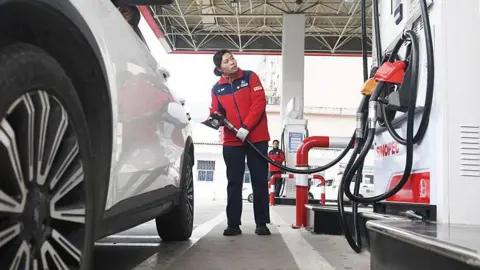
In response to rising energy costs driven by the Iran conflict, China has scaled back on planned fuel price hikes to alleviate the financial burden on drivers. The local price of petrol has surged nearly 20% since the conflict began, causing significant unrest and long queues at petrol stations across the country.
Price Adjustments
Originally, gasoline and diesel prices were set to rise by 2,205 yuan (£239; $320) per tonne, but government officials have reduced the hikes to 1,160 yuan for gasoline and 1,115 yuan for diesel, starting this Tuesday. This measure comes as a relief to over 300 million drivers in the nation who rely on petrol and diesel.
Context of the Increase
The price hikes were necessitated by soaring global oil prices, recently exacerbated by turmoil in the Middle East. Brent crude oil prices have fluctuated significantly, breaching the $100 per barrel mark, while the Strait of Hormuz—a critical oil shipping route—has been destabilized.
Impacts on Consumers
Over the weekend, extensive queues formed at petrol stations, with some locations running out of fuel due to panic buying. This recent spike in prices marks the fifth adjustment this year, emphasizing China's heavy dependence on imported oil from Gulf states, including Iran, which supplies more than 80% of its oil exports to China.
International Reactions
Other Asian nations are also feeling the pressures of high fuel prices, with governments implementing various measures to alleviate costs, including reduced workweeks and transport strikes in countries like the Philippines and Sri Lanka.
With these recent developments, China's approach to managing fuel prices and its strategic reserves will be crucial in ensuring economic stability amid rising international energy prices.