In brief
The Obama Presidential Center’s towering design, once intended to honor solidarity, draws praise for innovation and criticism for its stark silhouette and the loss of park land. While supporters argue the center brings cultural value and public spaces, opponents fear further displacement and a “Trojan horse” effect on low‑income neighborhoods. The museum’s grand opening, set for Juneteenth, coincides with expected safety of public debate and future city planning.
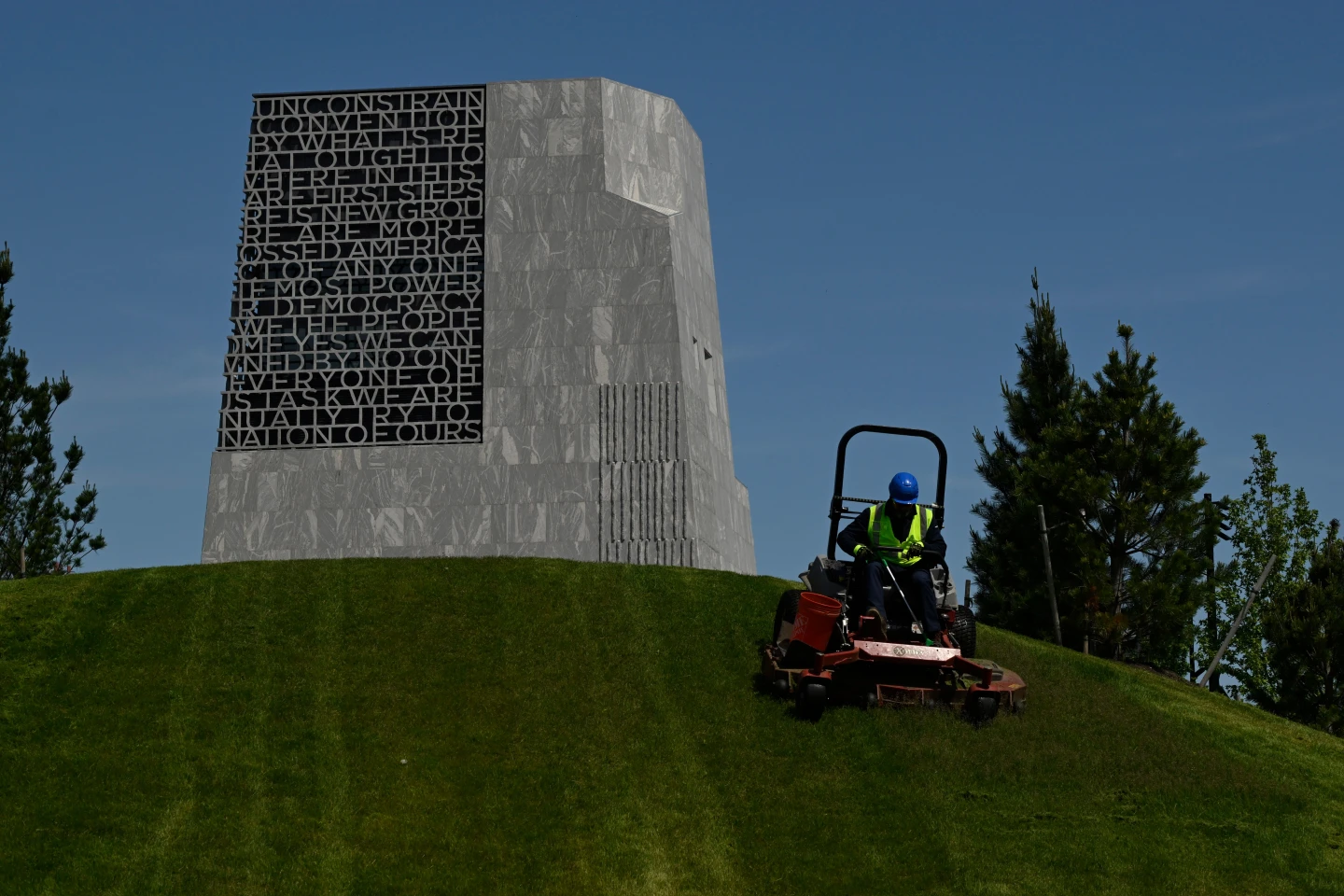
[ { "heading": "", "paragraph": "Placed on Chicago’s South Side, the Obama Presidential Center looms in granite over the leafy stretch of Jackson Park. The 225‑foot tower—more reminiscent of a grain elevator than a civic building—offers a glint of the city’s skyline from a height rarely seen by residents on the south." }, { "heading": "", "paragraph": "Construction crews are now polishing the last details ahead of a public opening slated for Juneteenth, offering 30‑plus years after the site was chosen. The rise has ignited conflicting viewpoints: some see the tower as a bold symbol of a historically inclusive America; others slam it as an aesthetic outlier in a park that traditionally hosts low‑rise, classical architecture." }, { "heading": "", "paragraph": "Locals compare it to dramatic imagery—from a “Star Wars” starship to a mausoleum— emphasizing disagreements about image, scale, and the role of the Obama Foundation’s private fundraising." }, { "heading": "", "paragraph": "Former Obama advisor Valerie Jarrett frames the design as a gateway to an international audience. She points to features like a glass‑enclosed “Sky Room” that provides panoramic views of downtown, intending to turn the building into a civic porch for the world." }, { "heading": "Architectural Debates and Chicago’s Identity", "paragraph": "Chicago’s architecture has long been a live‑wire discussion. Former Sun‑Times critic Lee Bey once called the city’s design criticism a “spectator sport,” noting that the Obama tower’s few windows and low‑lying masses feel alien amid city landmarks like the John Hancock Center’s towering X. Some, like Tribune columnist Edward Keegan, deem it an “un‑Chicago building” due to its unconventional shape and windowless facade." }, { "heading": "", "paragraph": "Despite cons, the center boasts community amenities—a new public library branch, basketball gym, playground, and gardens—purportedly designed to keep the park’s public feel." }, { "heading": "", "paragraph": "Community groups raised lawsuits in 2015 over alleged displacement, highlighting ‘housing protection’ demands. Critics argue that tearing up 20 acres of park land and removing a major thoroughfare for the tower hastened property value spikes in nearby neighborhoods, threatening low‑income and Black residents." }, { "heading": "", "paragraph": "An 82‑year‑old activist, Robin Kaufman, voiced her frustration walking near the center’s former wildlife sanctuary, citing how the tower intrudes into the natural scenery, stressing a constant reminder of the center’s intrusive presence." }, { "heading": "", "paragraph": "Shannon Bennett of the Kenwood Oakland Community Organization treads a more ominous line, calling the project a “Trojan horse,” suggesting it may be a precursor for future demographic transformations." }, { "heading": "Balance of Vision and Cost", "paragraph": "The center’s design—crafted by architects Tod Williams and Billie Tsien—used a stone finish to echo October’s “You are America” speech in 2015, grounded in solidarity. It includes an architectural overlay of the speech’s typography along one side to embody a calling a city that recognizes history." }, { "heading": "", "paragraph": "While the foundation states it has expanded public space and added amenities to the neighborhood, critics like Adam Rubin of the Chicago Architecture Center assess that “Time will tell how people utilize it.” Should the landmark continue to wield influence?" } ]