In brief
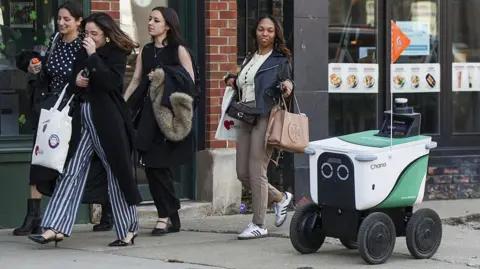
While autonomous delivery robots promise faster, greener deliveries, they are sparking controversy as city residents report collisions, sidewalk obstructions and job‑cutting fears. In Chicago, residents like John Roberts have staged petitions after robots forced them to weave through streets. Other cities, including San Francisco, Toronto, Glendale and Sheffield, are either restricting or banning robots from sidewalks to mitigate safety risks and address public concerns. Industry players stress safety systems and the potential for large‑scale expansion, but regulators and trade unions argue for stronger rules, insurance and job protections. The debate highlights the need for balanced policies that keep technology and citizens moving safely forward.
When a delivery robot appeared on a quiet Chicago street, John Roberts and his family were initially impressed by the “futuristic” tech. However, the robots soon forced them to dodge and shift away from the sidewalk, sparking concerns about safety and pedestrian rights.
Autonomous delivery vehicles—capable of mapping streets with sensors and GPS—have gained traction worldwide, from the United States to the UK, Japan and Germany. But the same technology is causing unintended consequences at pedestrian crossings, emergency vehicle access and local workplaces.
City councils and regulators are reacting in different ways. San Francisco limits robot movement to less busy streets, Toronto has banned sidewalk use since 2021, and Chicago recently prohibited robots in two neighbourhoods. Glendale councillors are discussing a temporary ban after a surge of unknown‑origin robots appeared out of nowhere.
John Roberts has launched a petition demanding a city‑wide suspension of delivery robots until robust safety tests and clear operating rules are in place. His campaign currently has over 4,400 signatures.
Industry operators, such as Starship Technologies, maintain that their robots are safe, polite and well‑programmed, yet reports of people colliding with safety flags, traffic congestion at crosswalks and emergency vehicle blockages persist. Trade unions like the Independent Workers Union of Great Britain warn that a rapid rollout threatens a large number of delivery drivers and precarious workers.
Experts predict a boom: a Transforma Insight report projects around 2.1 million delivery robots roaming the globe by 2034. Without a cohesive regulatory framework—covering insurance, accessibility, operating limits and accountability—urban planners may struggle to balance automation’s benefits with community safety and employment concerns.
Action‑makers and residents alike stress that future policies should negotiate which technological trajectory best serves public welfare while encouraging innovation.