
Chemistry Nobel celebrates unraveling life’s chirality puzzle
In a landmark announcement, the Nobel Foundation awarded the 2026 Chemistry prize to French chemist Henri B. Kagan and Japan’s Kenso Soai for unlocking the long‑standing mystery of why biological molecules favor one mirror‑image form.
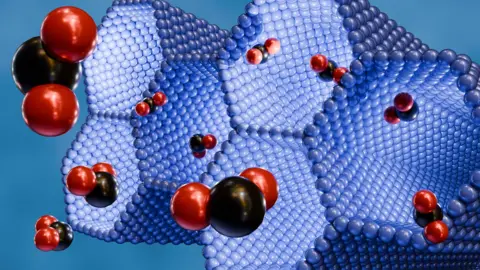
The prize recognizes their combined theoretical and experimental work that shows how certain chemical reactions can generate a slight excess of one enantiomer, a phenomenon that might have seeded the molecular asymmetry seen in amino acids, sugars and many other biomolecules.
“Life uses only one version of chiral molecules, which explains why proteins and DNA are built from a single hand‑ed form of their building blocks,” the committee said. “The scientists’ breakthrough offers a plausible route by which this preference could arise spontaneously, giving a clue to the origin of life.”
The study is set to ignite fresh experiments across synthetic chemistry, biochemistry and the search for life beyond Earth, as researchers explore how enantiomeric excess could evolve into the complex biomolecular systems that define living organisms.