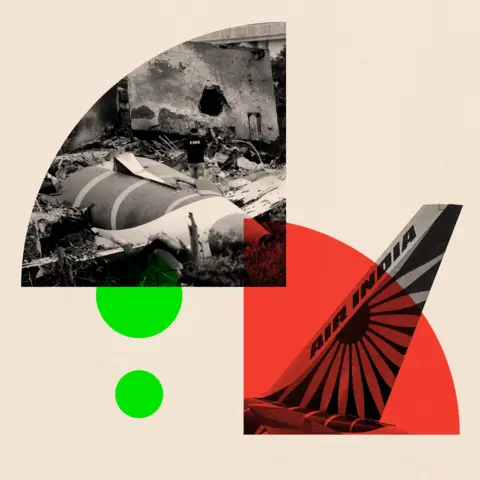
Air India Flight 171: Investigation Still Unresolved After One Survivor
On the evening of 12 June 2025, a hot and dry afternoon in Ahmedabad, a Boeing 787‑8 Dreamliner destined for London crashed 32 seconds after it left the runway. All 230 people aboard—169 Indian nationals, 53 Britons, and ten crew—were killed, and nineteen people on the ground died as well. The only person who survived was cabin crew member Vishwash Kumar Ramesh.
The crash is under investigation by India’s Aircraft Accident Investigation Bureau (AAIB), a government agency tasked with all major accident inquiries under Annex 13 of the Convention on International Civil Aviation. The AAIB released a 15‑page preliminary report, short for a major accident, that, however, offered little explanation of the cause. It focused on an unexpected transition of two fuel‑cutoff switches from run to cut position seconds after takeoff. In the configuration, the fuel tanks were deprived of thrust, a likely candidate for engine loss.
While the report notes the occurrence of a fuel cut‑off, it also captures one pilot questioning the other in the cockpit voice recorder, a detail that spurred speculation of an intentional action. Former NTSB chairman Robert Sumwalt and The Wall Street Journal suggested a potential pilot suicide, a theory that has been widely criticized by safety campaigners, the Federation of Indian Pilots, and aviation experts. The AAIB has responded by condemning “selective and unverified reporting” as “irresponsible” and urging the public to withhold premature conclusions.
Another contender for the crash’s cause centers on a complex electrical failure that could have rebooted the aircraft’s systems immediately after takeoff. Several electrical faults were documented over the plane’s lifetime, including a major battery fire incident in 2013 and a 2022 power‑panel burn. Critics point to the anomaly that the Ram Air Turbine (RAT) was deployed within five seconds of the fuel cut‑off, a timeline that simulator tests say requires 14–18 seconds, suggesting an earlier activation that could have triggered the crash. The claim is that the RAT deployment is an indicator of a deeper system misfire rather than hands‑on pilot interference.
Beyond the technical debates, the case highlights a broader industry issue: the integrity of investigations of major air accidents. Experts such as the Foundation for Aviation Safety and former investigator Tim Atkinson note that the 1944‑based investigative framework struggles to disentangle corporate and political influence, especially when the accident occurs in a nation whose interests may conflict with those of manufacturers and carriers. The International Civil Aviation Organization (ICAO) announced reforms to Annex 13 in 2028 that aim to enhance transparency and the possibility of independent investigations.
Until a definitive conclusion is published, the narrative around the crash of Air India Flight 171 remains fraught with uncertainty and suspicion. Whether the tragedy stems from a deliberate act or a cascading series of failures, the investigation’s findings will test the limits of safety investigations in a globalised, highly regulated airline industry.