Article Text:
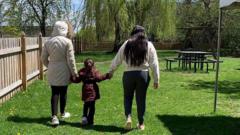
The Rainbow Bridge, connecting the United States and Canada, has long been a symbol of hope and connection. For Araceli, a Salvadorian migrant, it represented a critical yet daunting challenge as she and her family fled the threat of US deportations.
Accompanied by her partner and two daughters, aged four and fourteen, Araceli made her first attempt to cross the bridge on March 17. Armed with a suitcase and documents they believed would facilitate their entry into Canada and allow them to reunite with Araceli's siblings, their hopes were dashed. This setback was not an isolated incident—they faced two failed attempts before eventually succeeding on their third try.
Immigration experts noted a rising tide of asylum seekers fleeing both violence in their home countries and the stringent immigration policies implemented under former President Donald Trump. Araceli had lived in the US for over a decade without legal status, and only her youngest daughter, born in New Jersey, held an American passport. Despite trying to initiate the asylum process, Araceli encountered numerous obstacles, including financial exploitation by lawyers who left her with no clear answers.
Having witnessed the struggles of her siblings who successfully built new lives in Canada, Araceli decided to leave behind the life she knew in the US. Their first attempt brought them to a Canadian border checkpoint where they presented documentation proving their familial connection. However, a seemingly minor detail—a discrepancy in the names on official documents—led to their denial of entry.
The family's second attempt resulted in dire circumstances; they were detained for 14 days, confined in a windowless room where they could only occasionally step outside. Despite the bleak situation, help from a migrants’ organization and a supportive attorney sparked new hope. However, another denial came when Canadian officials cited their prior failed application as grounds to turn them away.
Now desperate, they crossed back into the US. During this time, Araceli's partner was detained by Immigration and Customs Enforcement (ICE), while Araceli and her children were placed in a migrant shelter where they could only wish for their family's reunion.
Finally, a Canadian court granted them a chance to appeal their case and return to the border. On May 5, seven weeks after their first attempt, they crossed the Rainbow Bridge once more, this time with legal representation. After several tense hours, the agent at the border welcomed them to Canada.
Though elation flooded Araceli at finally reaching safety, their reunion was bittersweet. Her partner remained trapped in the US bureaucracy for two additional weeks before finally being released on bail. The family’s story sheds light on the broader struggles faced by many asylum seekers navigating an increasingly complex immigration system, with many more such stories likely hidden from view. Araceli’s case is not unique; it illustrates the grave realities that countless families endure in search of safety and stability.
The Rainbow Bridge, connecting the United States and Canada, has long been a symbol of hope and connection. For Araceli, a Salvadorian migrant, it represented a critical yet daunting challenge as she and her family fled the threat of US deportations.
Accompanied by her partner and two daughters, aged four and fourteen, Araceli made her first attempt to cross the bridge on March 17. Armed with a suitcase and documents they believed would facilitate their entry into Canada and allow them to reunite with Araceli's siblings, their hopes were dashed. This setback was not an isolated incident—they faced two failed attempts before eventually succeeding on their third try.
Immigration experts noted a rising tide of asylum seekers fleeing both violence in their home countries and the stringent immigration policies implemented under former President Donald Trump. Araceli had lived in the US for over a decade without legal status, and only her youngest daughter, born in New Jersey, held an American passport. Despite trying to initiate the asylum process, Araceli encountered numerous obstacles, including financial exploitation by lawyers who left her with no clear answers.
Having witnessed the struggles of her siblings who successfully built new lives in Canada, Araceli decided to leave behind the life she knew in the US. Their first attempt brought them to a Canadian border checkpoint where they presented documentation proving their familial connection. However, a seemingly minor detail—a discrepancy in the names on official documents—led to their denial of entry.
The family's second attempt resulted in dire circumstances; they were detained for 14 days, confined in a windowless room where they could only occasionally step outside. Despite the bleak situation, help from a migrants’ organization and a supportive attorney sparked new hope. However, another denial came when Canadian officials cited their prior failed application as grounds to turn them away.
Now desperate, they crossed back into the US. During this time, Araceli's partner was detained by Immigration and Customs Enforcement (ICE), while Araceli and her children were placed in a migrant shelter where they could only wish for their family's reunion.
Finally, a Canadian court granted them a chance to appeal their case and return to the border. On May 5, seven weeks after their first attempt, they crossed the Rainbow Bridge once more, this time with legal representation. After several tense hours, the agent at the border welcomed them to Canada.
Though elation flooded Araceli at finally reaching safety, their reunion was bittersweet. Her partner remained trapped in the US bureaucracy for two additional weeks before finally being released on bail. The family’s story sheds light on the broader struggles faced by many asylum seekers navigating an increasingly complex immigration system, with many more such stories likely hidden from view. Araceli’s case is not unique; it illustrates the grave realities that countless families endure in search of safety and stability.