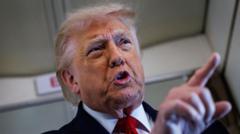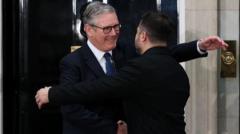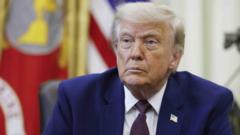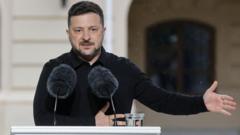
The relationship between former President Donald Trump and Ukrainian President Volodymyr Zelensky has reached a boiling point, following a public outburst during a recent Oval Office meeting. Prior to this confrontation, Trump had publicly disparaged Zelensky, labeling him a dictator and falsely alleging that Ukraine instigated the ongoing conflict.
This fallout signals a major shift in the US-Ukraine alliance, which was significantly strengthened under President Joe Biden's administration. The breakdown in communication raises alarm bells about the future of European security under NATO, especially regarding the US's commitment to its allies. The central concern is whether Trump would uphold the longstanding treaty established in 1949, which regards an attack on one NATO member as an attack on the United States itself.
European nations are increasingly anxious as Trump appears intent on rekindling ties with Russian President Vladimir Putin, exerting pressure on Ukraine while offering concessions that would disadvantage the Ukrainians. The security of Ukraine seems to be taking a back seat, resulting in apprehension among European leaders regarding their own safety.
Zelensky, adamant about not compromising Ukrainian interests, has faced Trump's ire for rejecting specific concessions, including a controversial minerals deal. Ukrainians perceive their struggle as a fight for national existence, believing that any promise from Putin would be unreliable if not backed by substantial deterrents. This urgency has driven Zelensky to demand American security assurances repeatedly.
The situation escalated into confrontation after Vice-President JD Vance entered the discussion, with some observing that the incident resembled a strategic maneuver to coerce Zelensky into compliance, or to craft a narrative that positions him as responsible for any ensuing crises.
In the aftermath of this public disagreement, should Trump choose to suspend military aid, Ukraine's determination to continue fighting will be tested. This development will inevitably increase pressure on European allies to fill the support void, leaving them grappling with questions of how to effectively assist Ukraine in its ongoing struggle.