In brief
President Donald Trump addresses Israel's recent airstrike on Hamas officials in Qatar, attempting to distance himself from the decision while promoting peace opportunities. This strike, conducted under Prime Minister Netanyahu’s directive, poses complications for U.S.-Qatar relations, especially given Qatar’s role in mediating between the U.S. and Iran. Trump suggests that the incident was not his decision while affirming Qatar as an ally.
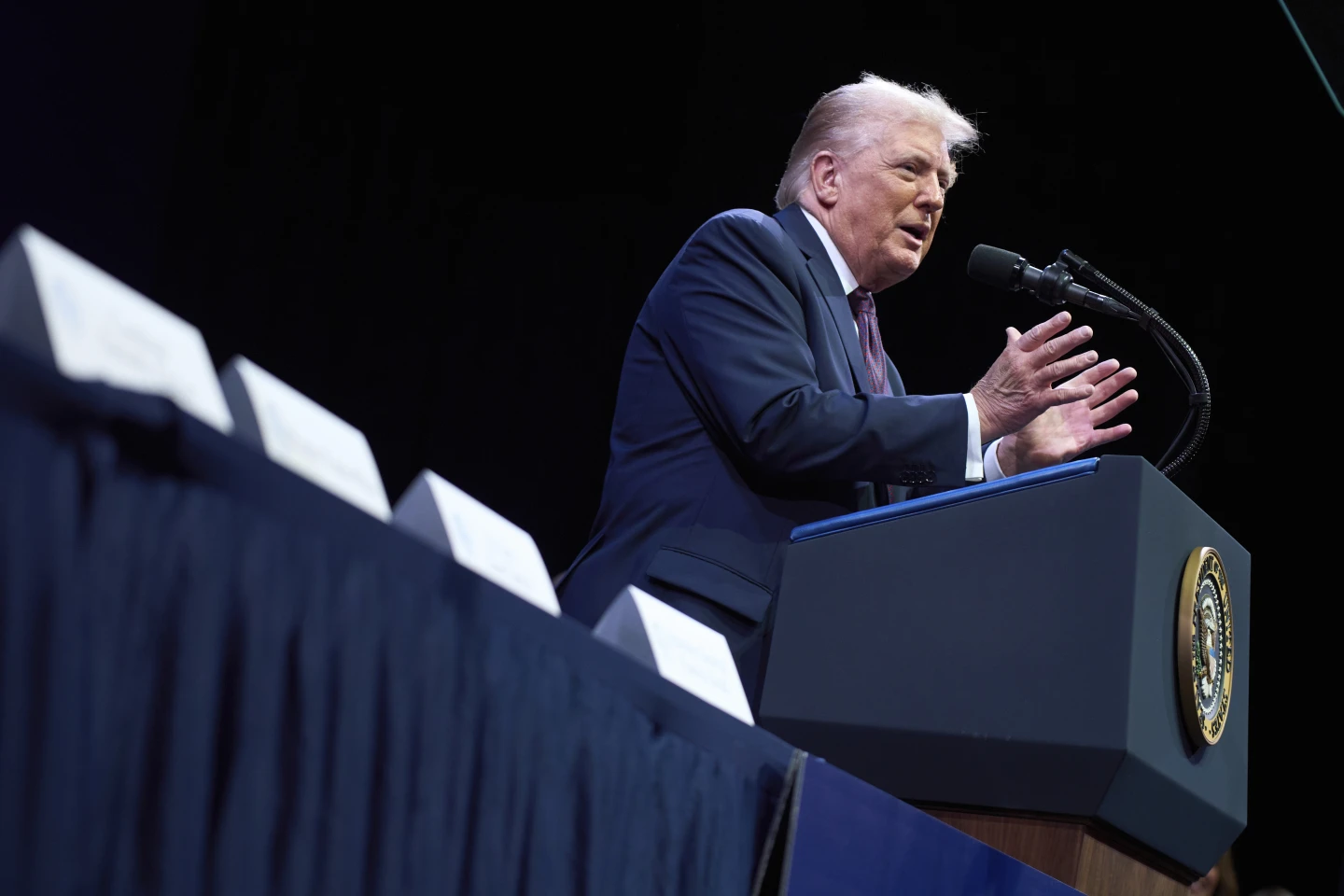
WASHINGTON (AP) — President Donald Trump is walking a delicate line in response to Israel’s offensive against Hamas officials in Qatar, distancing himself from the operation yet stopping short of denouncing Israel for its audacious actions on a significant U.S. ally's soil. Trump stated that the strikes, ordered by Israeli Prime Minister Benjamin Netanyahu, ‘did not advance Israel or America’s goals,’ but refrained from condemning the actions outright, even positing that this ‘unfortunate incident could serve as an opportunity for peace.’ Trump took to social media to clarify that the decision was solely Netanyahu's, emphasizing his association with Qatar, a country critical in facilitating dialogue between the U.S. and Iran. The U.S. continues to maintain about 10,000 troops at the Al Udeid Air Base in Qatar, underscoring the importance of this ally.Following the strikes, Trump claimed that he directed special envoy Steve Witkoff to alert Qatari officials of an impending attack, stating that the warning came too late to avert the incident, a claim contradicted by Qatar’s Foreign Ministry spokesman Majed al-Ansari.As Qatar has sought to enhance relations with Trump upon his return to office, including a sizable gift of a Boeing 747 meant for Air Force One, Trump expressed regret over the strike’s location. He acknowledged Qatar's past support for Hamas, highlighting the complexities of their relationship.Trump's comments, including a declaration that ‘eliminating Hamas’ is a worthy goal, reflect a careful approach to appease both parties amid ongoing tensions and efforts to resolve the enduring conflict in Gaza, all while ensuring his support does not wane in the face of geopolitical realities. In a vague pre-strike notification, the U.S. military learned of Israel's plans but lacked specific details to provide timely alerts to concerted regional allies, placing new pressures on U.S.-Qatar ties. Despite addressing the need for damage control, some experts suggest that the ramifications of this incident may strain Qatar's ongoing support for Hamas in future dealings. Trump's interactions with both Netanyahu and Qatar's leadership reflect an intricate balancing act as he navigates these tumultuous waters.