In brief
Amsterdam Island, situated in the southern Indian Ocean, is facing devastating wildfires that have scorched over 55% of its area, affecting a vital research station. Researchers have been evacuated, and authorities are mobilizing to control the situation and assess the environmental impact, especially on the island's unique wildlife.
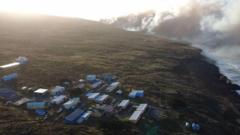
For nearly a month, Amsterdam Island, a remote French territory in the Indian Ocean, has been ablaze. The wildfire has consumed more than 55% of the island's 54 square kilometers, leaving a stark impact on the research community stationed there since the 1980s. Although the island has no permanent residents, researchers were conducting ecological studies when the fires broke out, leading to the evacuation of 31 scientific personnel to Réunion Island, located closer to Madagascar.The first flames were detected on January 15 by a scientist working at the Pointe Bénédicte observatory, tasked with monitoring atmospheric conditions. The fire quickly spread, prompting a nearby lobster fishing vessel to assist in the evacuation of the research team. Rémi Chazot, a computer scientist stationed on the island, described their survival as "incredibly lucky" given the precarious nature of their situation.The wildfires are attributed to dry conditions exacerbated by strong winds, which can gust up to 40 km/h (24 mph) on the island. Observations suggest the fire may have spread from the island's extensive network of peat bogs. The damage assessment is ongoing, but initial satellite images indicate that vital infrastructure, such as solar panels, food supplies, and communication networks, have sustained harm. Conservationists are concerned about the fires' impact on the island's rich biodiversity, which includes unique breeding grounds for several seal species and various albatross populations, including the endangered Amsterdam Albatross. This area has long served as a crucial site for studying atmospheric changes due to its relatively low pollution levels.The ongoing fire has forced researchers to suspend atmospheric studies on the island for the first time in 45 years, raising alarms about data loss for climate research. France's Southern and Antarctic Territories department deployed a reconnaissance mission aboard a navy vessel on February 7, comprising firefighters and technical specialists. Their goals are to safeguard the remaining areas of the settlement, identify the fire's origins, and restore essential utilities such as energy and water pipelines. The extensive damage and the risks to local wildlife emphasize the urgent need for effective wildfire management strategies in remote and ecologically significant regions like Amsterdam Island.