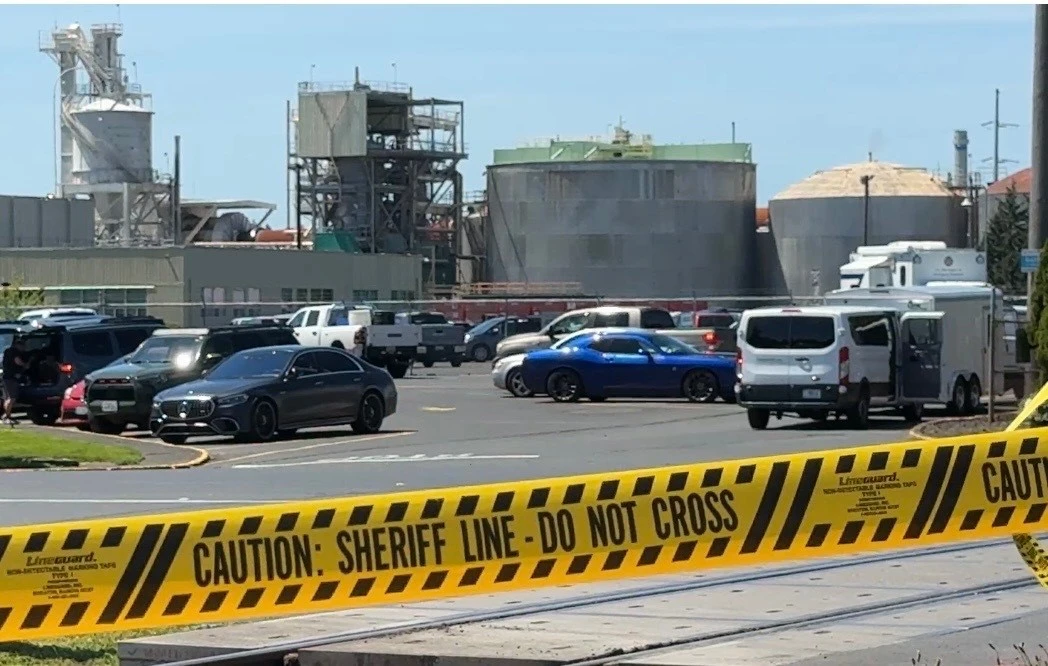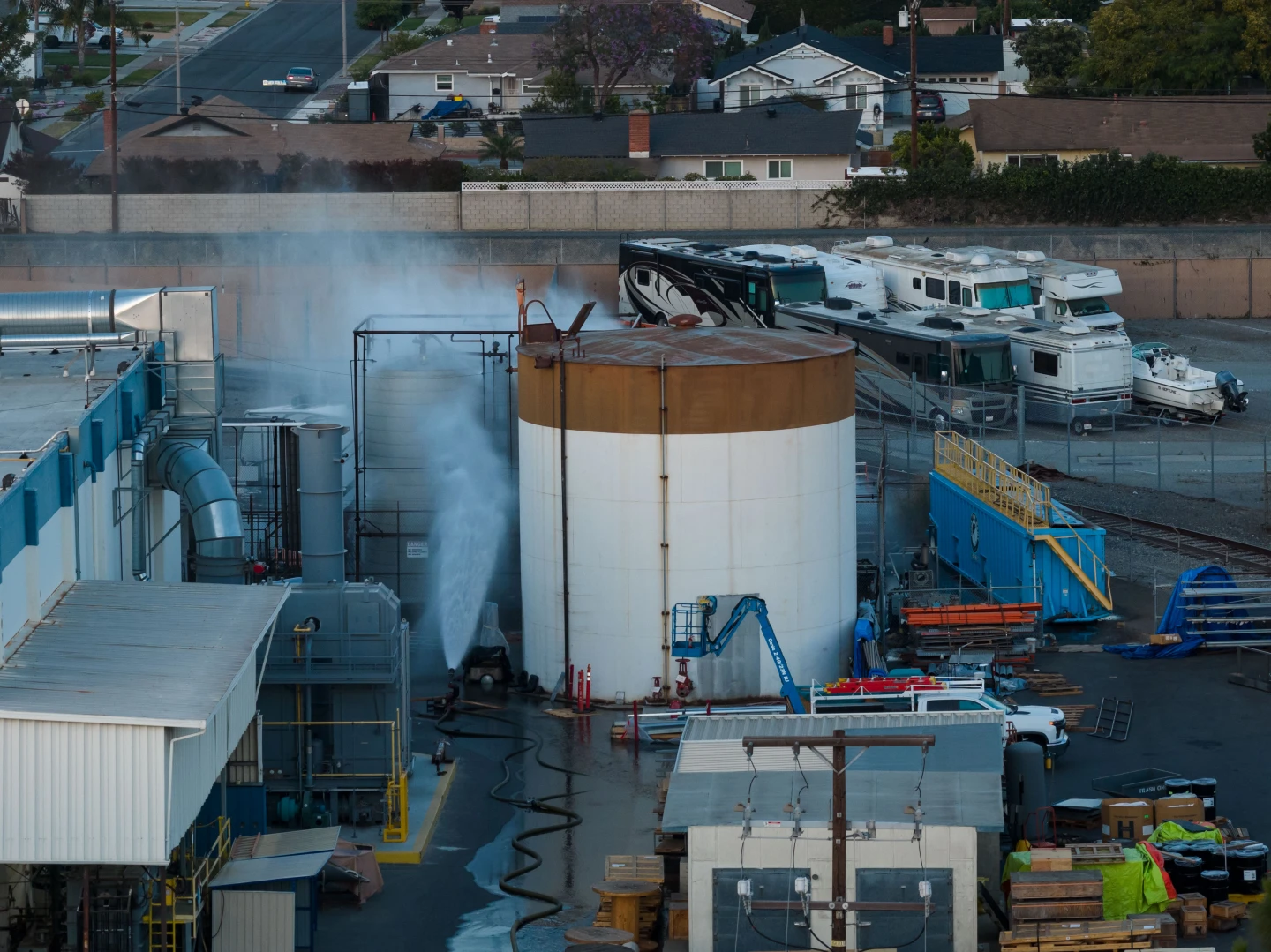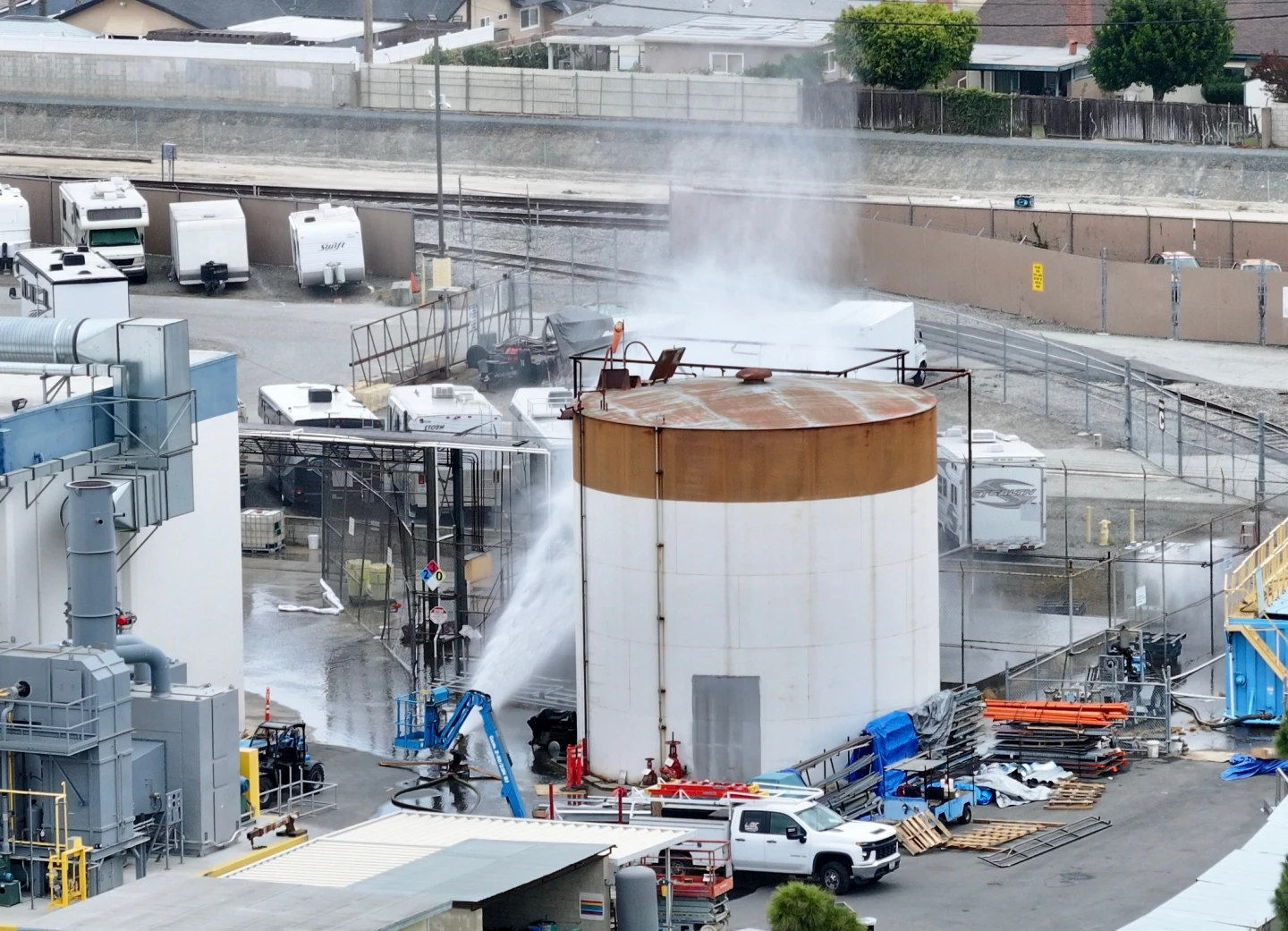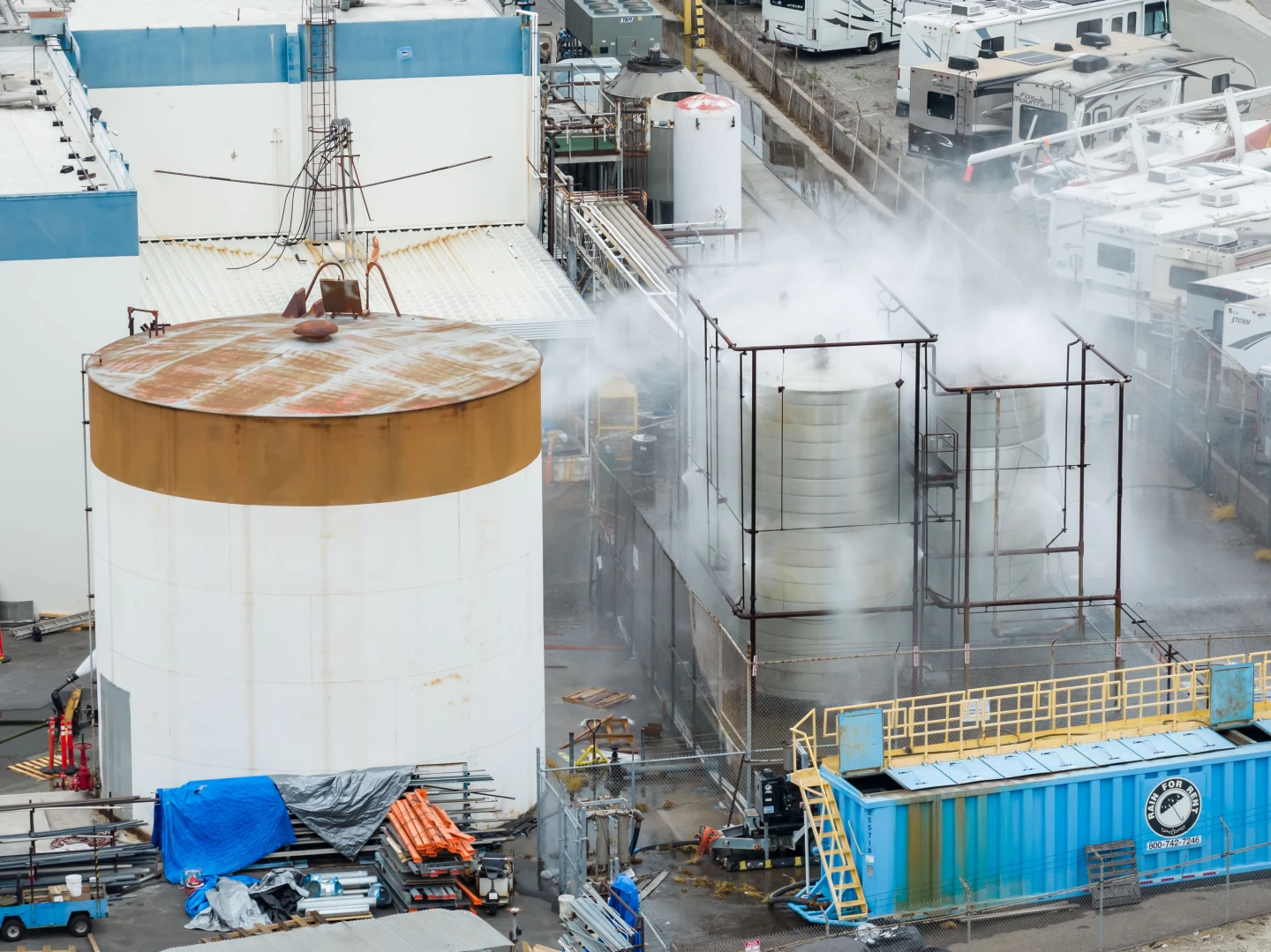
A 6,000‑‑7,000‑gallon tank of methyl‑methacrylate at GKN Aerospace’s Transparency Systems plant in Garden Grove cracked over the weekend, spurring emergency measures that saw about 50,000 residents evacuated. The tank, used to make plastic parts for commercial and military aircraft, began to vaporize as temperatures inside the structure climbed to 100 °F (37.7 °C) on Sunday.
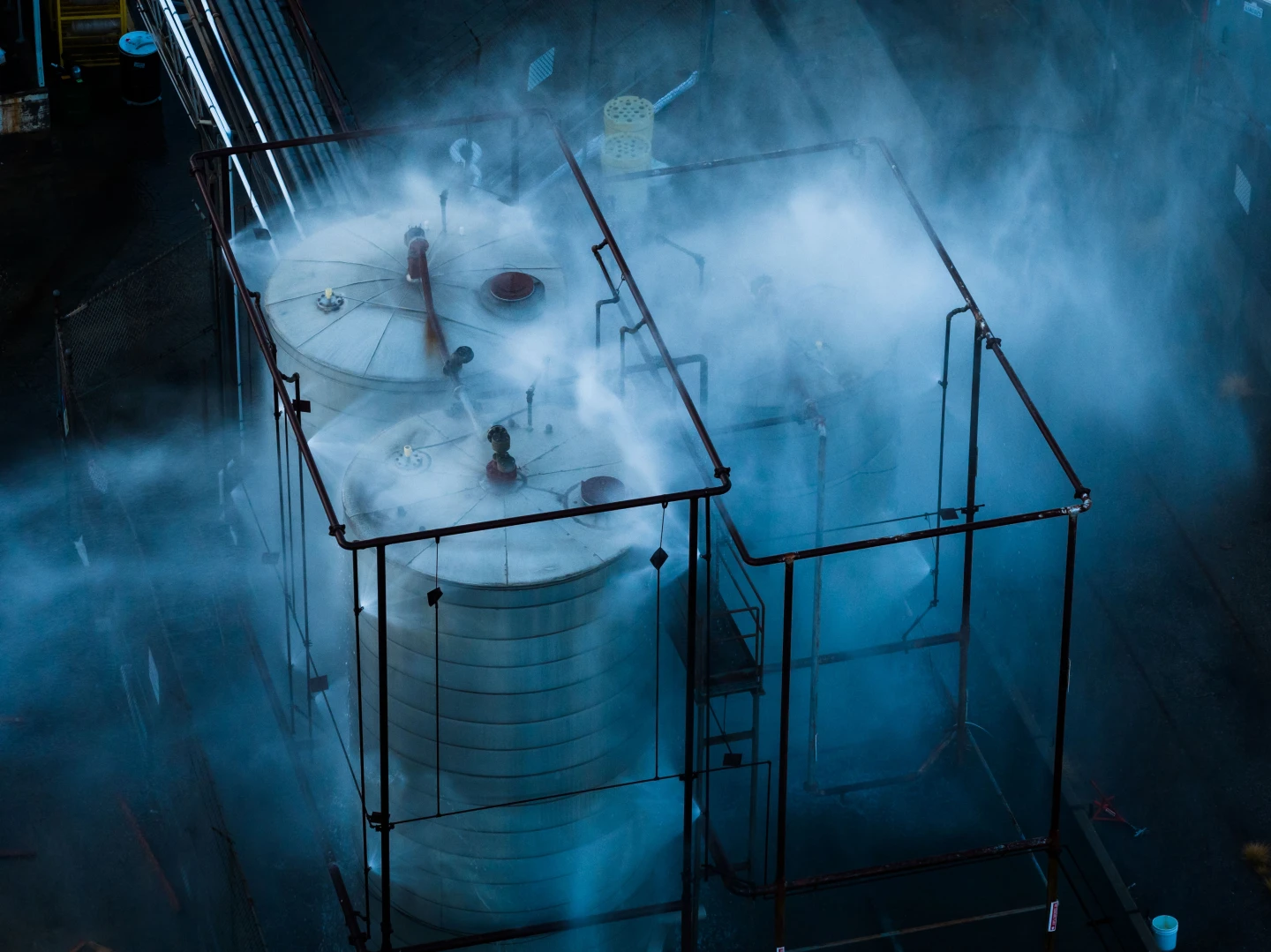
Firefighters sprayed the still‑heating tank with water in a bid to keep the pressure low, while drones flew overhead every ten minutes to keep a close eye on temperature spikes. Arrangements were made to keep the fluid from seeping into storm drains or nearby waterways, and Orange County Fire Authority officials said the crack likely reduced the risk of a catastrophic blast – the failure of the can’s integrity lets pressure escape, averting an explosive rupture.
Gov. Gavin Newsom declared a state of emergency Saturday and requested a federal emergency declaration to bring extra relief to the front lines. Environmental officials confirm that air quality around the evacuation zone remains within normal limits, though they will keep specialized monitors searching for methyl‑methacrylate specifically, as generic VOC tests can miss the precise hazards.
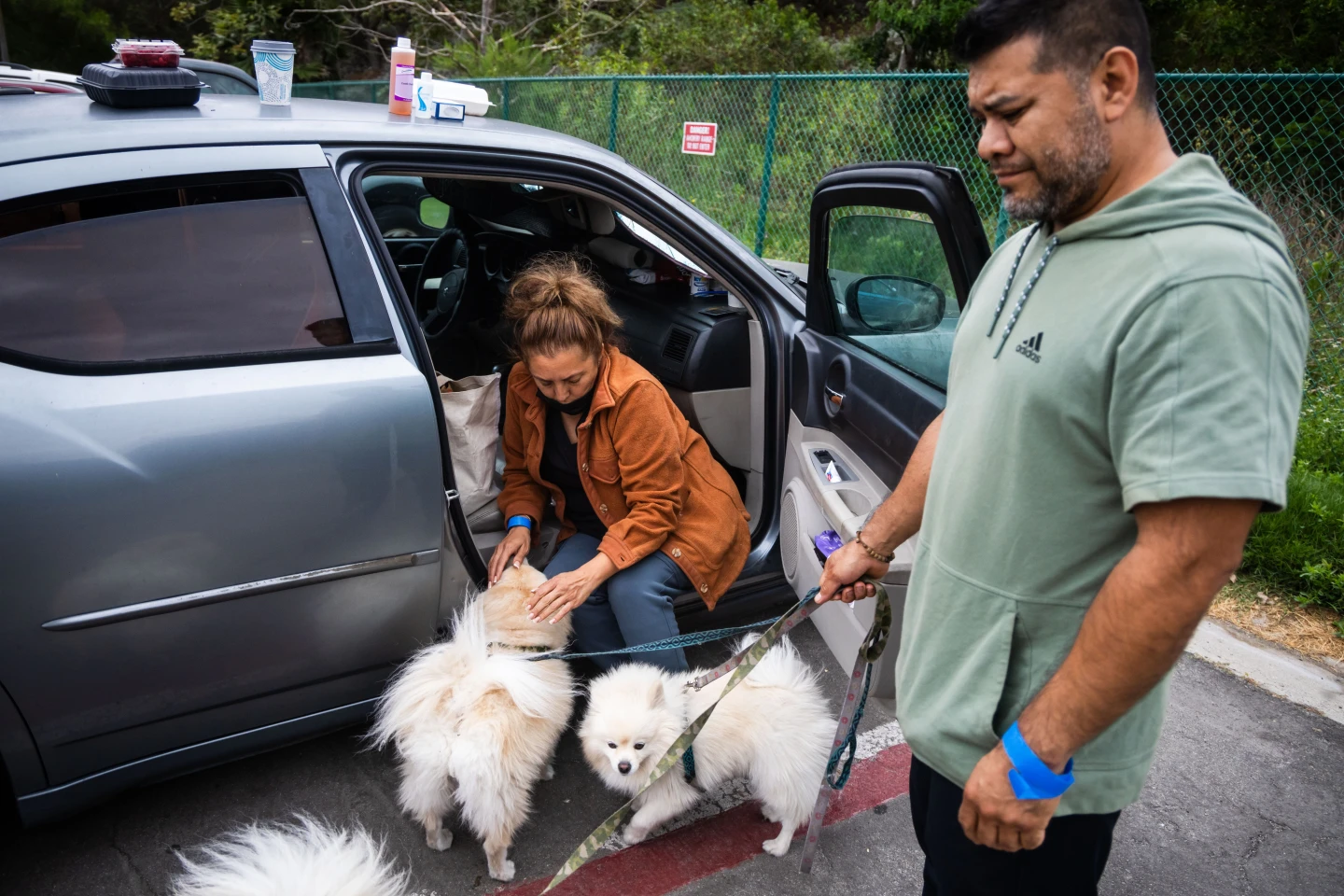
Residents of Garden Grove and neighboring La Palma have been living under the duress of an open‑air evacuation: school students slept in cars, and several shelters have been opened. Offices and businesses that had to relocate have been reimbursed at the behest of county health officials, who noted that the chemical’s odor is detectable only at a fraction of a mile and is not generally harmful.
In response to the crisis, a class‑action federal lawsuit was filed against GKN Aerospace Transparency Systems. Lawyers argue that any incident will devalue surrounding properties, keeping the company liable. GKN has apologized and is working around the clock to mitigate the risk.
Think of a soda can in a hot car. If the can has a hole, it releases its contents and doesn’t explode, but a complete seal allows pressure to build to dangerous levels, Purdue professor Andrew Whelton explained. Such warnings highlight the stakes involved as the community remains on high alert.
The incident follows GKN’s 2025 settlement with state regulators for recordkeeping, permitting and nitrogen‑oxide violations, a reminder that this is a high‑risk site. The state’s response is ongoing, and the head of the Orange County Fire Authority says they are short‑of‑sight – they’re watching for a single burst of heat that could send shrapnel flying.
AP journalist Ethan Swope contributed to this report from Garden Grove, California.}
Firefighters sprayed the still‑heating tank with water in a bid to keep the pressure low, while drones flew overhead every ten minutes to keep a close eye on temperature spikes. Arrangements were made to keep the fluid from seeping into storm drains or nearby waterways, and Orange County Fire Authority officials said the crack likely reduced the risk of a catastrophic blast – the failure of the can’s integrity lets pressure escape, averting an explosive rupture.
Gov. Gavin Newsom declared a state of emergency Saturday and requested a federal emergency declaration to bring extra relief to the front lines. Environmental officials confirm that air quality around the evacuation zone remains within normal limits, though they will keep specialized monitors searching for methyl‑methacrylate specifically, as generic VOC tests can miss the precise hazards.
Residents of Garden Grove and neighboring La Palma have been living under the duress of an open‑air evacuation: school students slept in cars, and several shelters have been opened. Offices and businesses that had to relocate have been reimbursed at the behest of county health officials, who noted that the chemical’s odor is detectable only at a fraction of a mile and is not generally harmful.
In response to the crisis, a class‑action federal lawsuit was filed against GKN Aerospace Transparency Systems. Lawyers argue that any incident will devalue surrounding properties, keeping the company liable. GKN has apologized and is working around the clock to mitigate the risk.
Think of a soda can in a hot car. If the can has a hole, it releases its contents and doesn’t explode, but a complete seal allows pressure to build to dangerous levels, Purdue professor Andrew Whelton explained. Such warnings highlight the stakes involved as the community remains on high alert.
The incident follows GKN’s 2025 settlement with state regulators for recordkeeping, permitting and nitrogen‑oxide violations, a reminder that this is a high‑risk site. The state’s response is ongoing, and the head of the Orange County Fire Authority says they are short‑of‑sight – they’re watching for a single burst of heat that could send shrapnel flying.
AP journalist Ethan Swope contributed to this report from Garden Grove, California.}