In brief
Yoweri Museveni won 72% of the vote in the recent Ugandan elections, securing his seventh term amidst allegations of voter suppression and electoral fraud. While this victory reinforces his dominance, concerns about his health and succession loom large as Uganda's political landscape evolves. The opposition, led by Bobi Wine, faces significant challenges in countering Museveni's decades-long rule. As the nation eyes its future, the influence of Museveni's son, Gen. Muhoozi Kainerugaba, emerges as a potential precursor to generational transition.
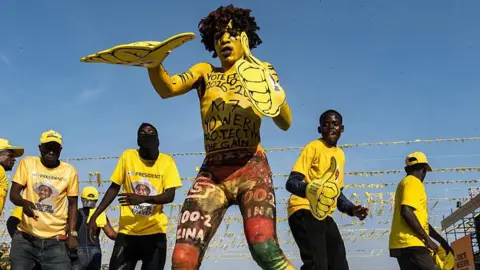
For supporters of Uganda's President Yoweri Museveni, his resounding victory in the just-concluded election is a vindication of his 40-year-long rule.
He won with 72% of the vote, close to his highest-ever tally of 74% in Uganda's first direct presidential election in 1996.
This strengthens the 81-year-old's claim that he still commands the support of the overwhelming majority of Ugandans, having seized power as a rebel commander in 1986.
However, Museveni's main election rival, former pop star Bobi Wine, dismissed the result as fake and alleged that he had gone into hiding following a raid on his home by security forces.
Museveni campaigned on his track record, asserting that he has delivered political and economic stability during an era of global uncertainty. He aims to guide Uganda towards achieving middle-income status by 2030, a goal framed as a fitting legacy for his upcoming eighth and potentially final term.
Museveni regards Uganda's emerging oil industry as pivotal for this goal, forecasting that once oil exports commence, the economy will experience double-digit growth rates.
He has set October as the target date for the first crude oil exports through a pipeline to Tanzania.
Despite his age, the president seeks to project vigor and control; he has claimed to have visited all of Uganda's electoral constituencies. Yet, his campaign was marred by speculation about his health, exacerbated by the abrupt cancellation of multiple campaign events described as state duties.
Bobi Wine, on the other hand, saw his share of the vote decrease from 35% in 2021 to 25% this year, even with support from Uganda's youthful electorate. Wine argues that the election was neither credible nor legitimate, citing interference at his rallies and alleged voter fraud.
As questions rise about his future in politics, many speculate he could follow in the steps of repressed opposition figures in Africa.
Analysts believe the outcome of this election is less about immediate transformation and more about the slow political shifts occurring within Museveni's National Resistance Movement party and its workings.
Museveni's recent cabinet reshuffle and subsequent NRM elections indicated a shift towards a post-Museveni order, with the rise of his son, Gen. Muhoozi Kainerugaba, within political ranks.
Authorities have recently become decentralized; decisions that were once made by Museveni are now filtered through a tight inner circle of family members and loyal associates, prompting questions about the future of Ugandan leadership.