In brief
Bulgaria has joined the eurozone as its 21st member after years of preparation and public debates. The transition, which replaces the Bulgarian lev with the euro, has provoked mixed reactions among the population, reflecting a divide between urban optimism and rural skepticism. Prime Minister Rosen Zhelyazkov's government faces political challenges amid public protests against the 2026 budget, complicating the acceptance of the new currency. While many younger Bulgarians welcome the shift, older generations express fears over loss of sovereignty and economic stability. The design of the new euro coins incorporates Bulgarian cultural symbols to address these concerns.
Bulgaria - the poorest country in the European Union - has become the 21st member of the eurozone, leapfrogging more obvious and prosperous candidates like Poland, the Czech Republic, and Hungary.
For mostly urban, young, and entrepreneurial Bulgarians, it's an optimistic and potentially lucrative leap - the final move in a game which has brought Bulgaria into the European mainstream, from NATO and EU membership to joining the Schengen zone, and now the euro.
However, for the older, rural, and more conservative populations, the replacement of the Bulgarian lev by the euro incites fear and resentment.
The lev, meaning lion, has been the Bulgarian currency since 1881, but it has been pegged to other European currencies since 1997 - first the Deutschmark, then the euro.
Opinion polls show Bulgaria's 6.5 million population is nearly evenly split on adopting the new currency, and political turmoil complicates the transition.
Prime Minister Rosen Zhelyazkov's coalition government lost a confidence vote on December 11 amid mass protests against the 2026 budget. Bulgaria has held seven elections in the past four years, with an eighth expected early next year.
“I don’t want the euro, and I don’t like the way it has been imposed on us,” said Todor, a 50-year-old small business owner in Gabrovo. He believes if a referendum were held, 70% would vote against the euro.
In contrast, others like Ognian Enev, 60, who operates a tea shop in Sofia, are more positive, seeing it as merely a technical change that won’t significantly affect their business.
Since August 2025, all Bulgarian shops have been required to display prices in both currencies, with €1 valued at approximately two lev. To prevent price rounding during the switch, surveillance measures have been implemented.
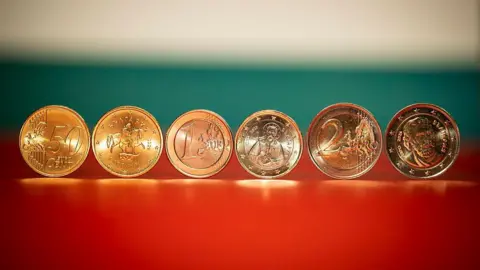
The new euro coins will feature Bulgarian historical figures to symbolically maintain national identity and sovereignty.
As the transition progresses, both public sentiment and economic forecasts will play a critical role in determining the future impact of this change for Bulgaria, drawing lessons from other nations’ journeys into the eurozone.