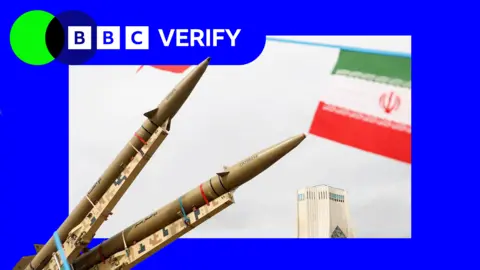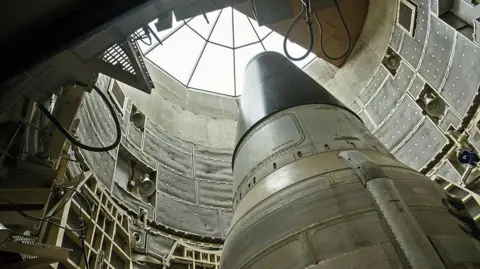
The New START treaty, the last remaining nuclear weapons control agreement between the US and Russia, is due to expire soon, leading to fears of a renewed arms race.
Signed in 2010, the Strategic Arms Reduction Treaty (New START) limited each country to 1,550 deployed strategic nuclear warheads and established transparency protocols, ensuring better communication and inspections to avoid misunderstandings.
The treaty's expiration marks a significant downturn in arms control cooperation that was pivotal in managing nuclear threats since the Cold War. Notably, recent tensions over the Russia-Ukraine conflict have compounded these issues, with fears voiced by global leaders and experts alike.
On the eve of the treaty’s expiration, calls for renewal were articulated by Pope Leo, emphasizing the need for both nations to make significant efforts to avoid a new arms race.
Admiral Sir Tony Radakin, the former head of the British armed forces, warned of the collapse of the arms control architecture, citing it as a dangerous aspect of global security amidst rising nuclear threats.
With both nations modernizing their nuclear capabilities, some analysts contend that an arms race is already underway, and the geopolitical landscape appears increasingly precarious with little commitment from either side to pursue new agreements.
Finally, as both the US and Russia develop advanced military technologies, reaching a new arms control treaty may become increasingly difficult, signaling a potentially hazardous era ahead for international security.