In brief
The UN human rights chief has expressed alarm at a sharp rise in executions in Iran since March, calling the death penalty a tool used to intimidate and suppress dissent. Over 56 people have been executed on national security charges, with many more at risk and drug‑related executions continuing. Iran, the world's second‑most prolific executor after China, carried out 2,159 executions last year—an all‑time high since 1981. UN officials urge Iran to halt executions and ensure fair trials, as evidence shows confessions obtained under torture and prolonged closed hearings. Iran has yet to respond, while the judiciary reportedly carried out new executions amid the war with Israel and domestic unrest.
The UN human rights chief, Volker Türk, has voiced deep concern over a rapid increase in executions in Iran since March, describing the death penalty as a tactic to instil fear and stifle dissent.
According to Türk, 56 people have faced execution on national security grounds in just over three months, 27 of those linked to January’s nationwide protests. More than 100 others remain at risk, while drug‑related executions continue at an alarming rate.
Iran is considered the world’s second‑most prolific executioner after China, with 2,159 people put to death last year—a record high since 1981—and 45 of those executions involving suspected dissidents charged with national security.
The UN’s statement also criticises Iran’s lack of fair‑trial guarantees, citing confessions allegedly obtained under torture and the rapid sentencing of 12 defendants to death in a single, closed three‑hour hearing.
Recent executions illustrate the stark realities: two men convicted of spying for Israel were executed on Monday; 19‑year‑old Arvin Kheirkhahan faced execution after the January unrest; and Abolfazl Sepahi Badjani and Amirhossein Safari Hosseinabadi were publicly executed in Isfahan for alleged participation in the 8‑January killing of police officers.
The UN urges Iranian authorities to halt all executions and move toward abolition of the death penalty, stating that “such punishment has no place in our world.” No official comment has yet been released by the Iranian government.
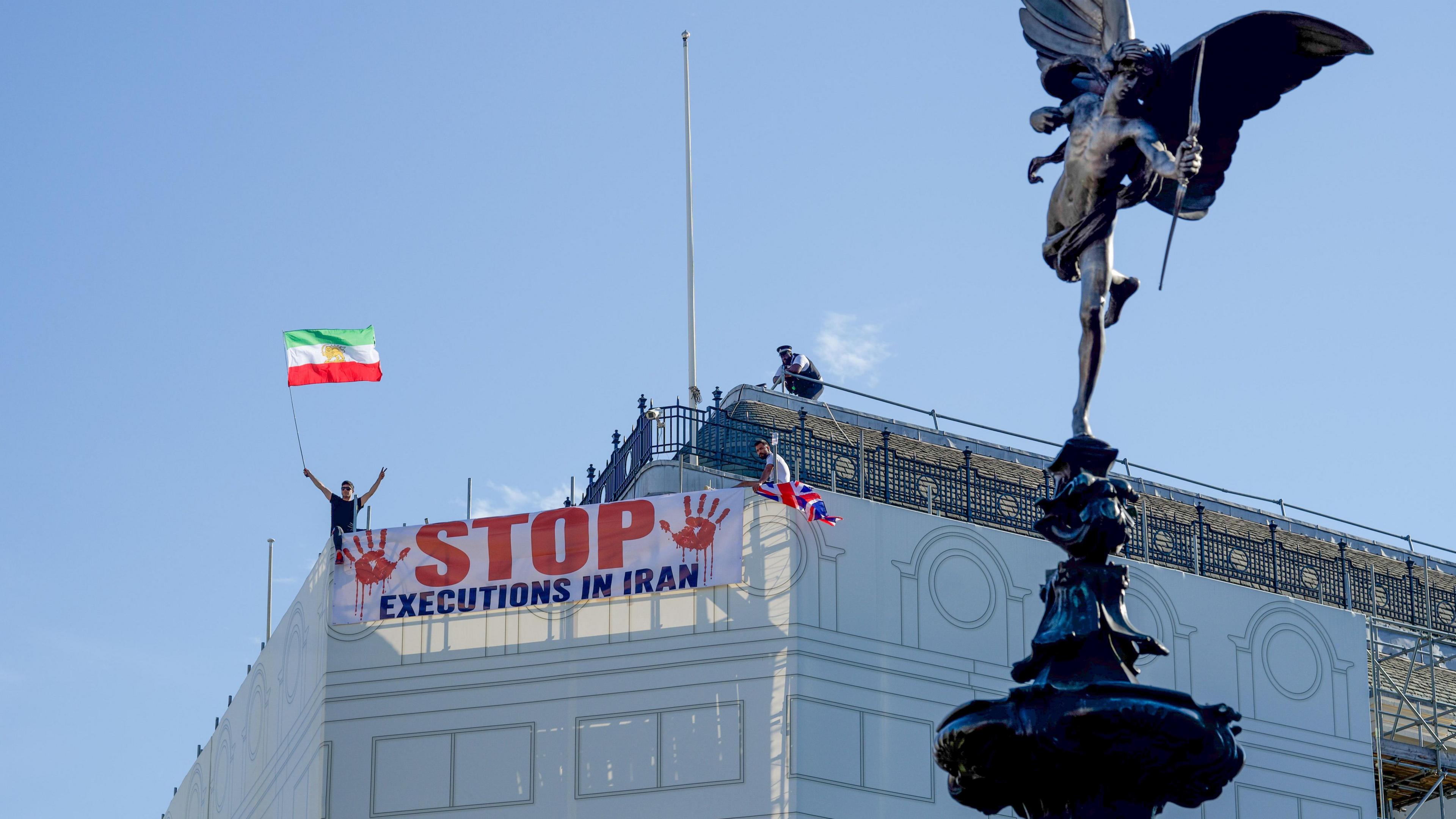
Image caption: Opponents of the death penalty in Iran staged a protest in London’s Piccadilly Circus last week.