They destroyed the future: Palestinian anger over rising demolitions in East Jerusalem
There is the loud din of a demolition below Jerusalem's walled Old City, and from a hillside I watch a large Israeli excavator tearing into a Palestinian house.
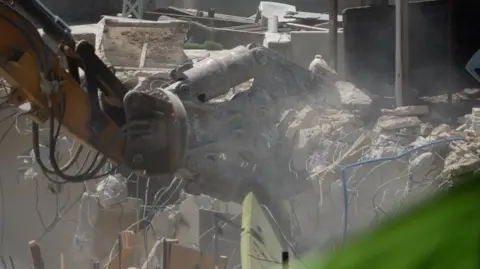
Since late 2023, the al‑Bustan area of the Silwan neighbourhood has lost 59 homes as part of a rapid demolition programme. With global attention focused on the Gaza war and the crises in Iran and Lebanon, the brutal removal of Palestinian families is unfolding in the shadows of East Jerusalem.
"There is no future. They destroyed the future and everything else," says 58‑year‑old Fayez Awad, who now sits in the sole remaining floor of his ruined property.
"We spent our whole lives building this house. This is all we managed to achieve in life. They brought us back to zero again, me and my children," Awad adds.
Israel captured East Jerusalem in 1967 and later annexed it, annexation that most countries do not recognise. For the past two decades, the Jerusalem municipality has pursued a plan to turn al‑Bustan into a biblically‑themed park operated by a Jewish settler organisation. Demolition orders, backed by Israeli courts, have accelerated along the narrow streets.
Israeli law allows properties owned by Jews before 1948 to be taken over for settlement use, leaving Palestinians in a legal limbo where they cannot reclaim historical homes. Bimkom reports that only 7% of new housing permits in Jerusalem go to Palestinians, who make up about 40% of the city’s population.
Fakhri Abu Diab, a local activist, is threatened with eviction after his home was demolished. "Israel is using the geopolitical situation to finish the issue. It is very difficult and painful and the international community has left us all alone," he says.
In the Christian and Muslim quarters of the Old City, Israeli flags now mark buildings where settlers live, even on the side of a yeshiva that recently had to evict elderly Palestinian residents. The Basha family, who had lived in a historic yeshiva for generations, are now forced to leave after a court ruling, but a district court has issued a temporary injunction while they appeal.
Jerusalem’s planners have also approved a controversial ultra‑Orthodox yeshiva at Sheikh Jarrah’s entrance, while the government is exploring the seizure of dozens of Palestinian homes by the Chain Gate organisation.
The European Union has described the situation in East Jerusalem, particularly in Al‑Bustan, as “dire” and has strongly opposed Israel’s settlement policy. The EU reiterated its opposition in a recent statement to the UN.
The plight of hundreds of Palestinians, such as 97‑year‑old Yusra Qweider, who have been displaced multiple times since 1948, continues to draw attention from international diplomats, but the pressure to stop the demolitions remains largely unmet.
Across the city, the lack of available housing for Palestinians compounds the crisis, creating a sense of imminent displacement that fuels fear and anger among residents.
These demolitions are part of a broader strategy by Israeli authorities to cement Jewish supremacy in Jerusalem, while marginalising Palestinian presence and undermining any prospects for a future shared city or independent state.
}