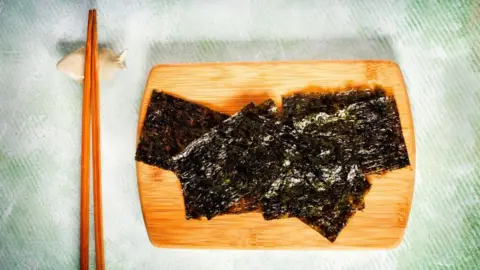
Black, crispy, often flat and square - dried seaweed, known locally as gim - is a humble staple on everyday dining tables across South Korea. But as its global popularity grows, its rising prices are worrying gim-lovers nationwide.
Lee Hyang-ran has been selling gim for the past 47 years. In the past, people from Western countries thought Koreans were eating something weird that looks like a piece of black paper, she recalls from her market stall in central Seoul. I never thought I'd be selling gim to them. But now, they all come here and buy it.
South Korea is recognized as the world's largest producer and exporter of gim, supplying markets across Asia, North America, and Europe. As reference, the product is often dubbed Korea's black semiconductor due to its popularity.
Exports have surged, with South Korea's dried seaweed exports hitting a record US$1.13bn in 2025 according to the Korea Maritime Institute. This spike in demand has pushed prices higher, with typical costs increasing from around 100 won ($0.06) per sheet in 2024 to over 150 won, marking a record high.
Kim Jaela, a regular buyer, mentions she has had to rethink her bulk purchases given the sharp price rise. Many shoppers are now adapting their buying habits in response to elevated prices.
The increased global appetite for gim aligns with the rising influence of Korean culture worldwide. As seen with viral products like Trader Joe's Gimbap, there is a growing interest in Korean cuisine which is translating into demand for gim.
Professors and local vendors alike note the growing popularity of gim, drawing parallels to its increasing visibility in global markets. From Asian to Western countries, more people are becoming familiar with gim, increasing global demand, says Lee Eunhee, a professor of consumer studies.
The price upsurge is attributed to various factors including inflation and rising labor costs. However, the primary concern is that many local consumers view these increases as intolerable given gim's status as an affordable staple.
In response to these challenges, the South Korean government, along with industry players, are taking steps to monitor prices and stabilize the market. Some initiatives include developing a land-based seaweed research and development center to facilitate year-round harvesting.
For vendors like Lee, business is thriving despite the price increase. Gim has been selling like hot cakes, she states, expressing her enthusiasm for the rising popularity of Korean gim on a global scale.