In brief
Gold prices have topped $5,000 per ounce for the first time, despite economic uncertainties linked to escalating geopolitical tensions involving the US and NATO. Investors are turning toward gold and other precious metals as safe-haven assets. Factors contributing to this surge include inflation, a weakening US dollar, and increasing central bank purchases of gold. Additionally, cultural factors, such as seasonal demand in Asia during festival times, highlight the multifaceted reasons behind the increased appeal for gold.
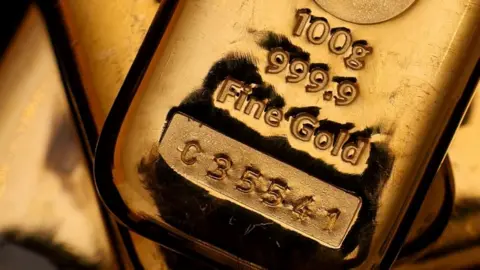
The price of gold has risen above $5,000 (£3,659) an ounce for the first time ever, extending a historic rally that saw the precious metal jump by more than 60% in 2025.
This surge comes as tensions between the US and NATO over Greenland have heightened concerns about financial and geopolitical uncertainty.
US President Donald Trump's trade policies have also worried markets. Recently, he threatened to impose a 100% tariff on Canada if it strikes a trade deal with China.
Gold and other precious metals are seen as safe-haven assets that investors buy in times of uncertainty. On Friday, silver also surpassed $100 an ounce for the first time, building on its nearly 150% rise last year.
Demand for precious metals has been driven by factors including higher-than-usual inflation, a weak US dollar, and increased purchasing by central banks worldwide, while the US Federal Reserve is expected to cut interest rates again this year.
Geopolitical strife, including conflicts in Ukraine and Gaza, has further contributed to gold's escalating prices.
Gold is prized for its relative scarcity, with around 216,265 tonnes mined to date, primarily since 1950 due to advancing mining technology.
Experts view owning gold as a strong diversification strategy in an unpredictable world.
In 2025, gold had an outstanding year, its biggest annual gain since 1979, as investors flocked to precious metals amid fears regarding Trump's tariffs and an inflated tech market.
Financial analysts explain that gold prices typically rise when investors foresee interest rate cuts, which lead people to look for alternative investments like gold.
Furthermore, the gold market has seen significant participation from central banks, with many shifting away from the US dollar, a trend that has benefited gold prices immensely.
Despite the current rally, some experts caution that unexpected news could impact gold prices negatively.
Culturally, many people purchase gold during festivals or as gifts, as seen during India's Diwali, which is believed to bring wealth and luck.
In India, households hold a staggering $3.8 trillion in gold, equivalent to 88.8% of the country's GDP. Similarly, China remains the world's largest gold consumer, reinforcing traditions that associate gold with fortune and prosperity.