In brief
The International Monetary Fund (IMF) has issued a stark warning regarding the risks to global economic growth, identifying trade tensions and a potential decline in the artificial intelligence (AI) sector as key threats. Their latest report indicates a projected global growth rate of 3.3% for 2026, but cautions that these risks can tilt the outlook negatively. The IMF emphasizes the importance of central bank independence for maintaining economic stability. Concerns have also been raised about the implications of political actions and their potential to disrupt financial markets and commodity prices.
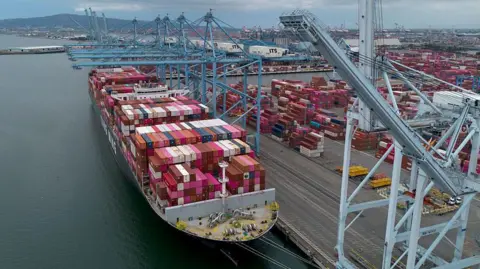
Trade tensions and a reversal in the artificial intelligence (AI) boom are among the main risks to global economic growth, according to a warning from the International Monetary Fund (IMF).
The IMF made these comments in its latest world economic outlook, stating that the global economy is steady, with the expectation of remaining resilient throughout this year.
This forecast preceded Donald Trump's announcement earlier in the week about imposing tariffs on eight European nations that oppose his proposed acquisition of Greenland.
Additionally, the IMF indicated that maintaining the independence of central banks is crucial for global economic stability and growth.
Projections show global growth is set to reach 3.3% this year, up from a prior forecast of 3.1%, followed by a slight decrease to 3.2% in 2027.
IMF Chief Economist Pierre Olivier Gourinchas commented, We have a picture of a global economy that is growing at - it's not outsized growth rates but it's quite resilient, quite robust.
In a sense the global economy has been shaking off the trade disruptions of 2025, and it's coming out ahead of what we were expecting.
While the effects of tariffs have slowed global activity, Gourinchas noted that offsetting factors have helped maintain growth.
The IMF also highlighted that the global economy has benefitted from increases in technology-related investments, particularly in AI.
However, officials caution that the risks to this outlook remain predominantly negative, suggesting that overly optimistic assumptions about the AI growth could provoke abrupt market corrections.
Even slight market corrections could have considerable effects, as rising share prices have significantly bolstered overall wealth in recent years. Moreover, the growing debt from AI investments among firms could compound these vulnerabilities.
On top of the potential challenges stemming from the AI sector, the IMF warned that escalating trade tensions could generate further uncertainty affecting economic activities.
Domestic political tensions or geopolitical tensions could erupt, introducing new layers of uncertainty and disrupting the global economy through their impact on financial markets, supply chains, and commodity prices, the report stated.
In regards to the UK, the IMF predicts growth of 1.3% this year, which positions it as one of the quickest growing economies within the G7, trailing only the US and Canada. Chancellor Rachel Reeves noted that the UK has seen an upgrade in growth forecasts by the IMF for the third time since April 2025.
The IMF also anticipates global inflation to decline from 4.1% estimated in 2025 to 3.8% in 2026, and 3.4% in the following year.
In the UK, inflation is expected to hit the targeted 2% rate by the end of the year, given the slowing wage growth amid a less vigorous job market.
The IMF emphasized that maintaining central bank independence is key to preventing fiscal dominance and achieving economic stability in the future, warning that challenges to this independence could emerge as countries face significant borrowing needs.