In brief
Despite heightened interest in mineral wealth, investments in the Arctic are stalling due to political tensions, leaving fishermen like Sondre Alnes-Bonesmo to brave harsh conditions in a changing environment.
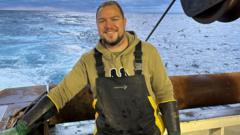
The Arctic has been thrust into the limelight once again with Donald Trump’s expressed desire to purchase Greenland, driven largely by national security motives and an alluring mineral wealth. While Trump’s focus is on Greenland, the broader Arctic landscape faces significant impairments in development as geopolitical tensions rise. For Norwegian fisherman Sondre Alnes-Bonesmo, working conditions in the Arctic Ocean have become increasingly harsh. It’s mid-winter; total darkness prevails, temperatures can plummet below minus 40°C, and fierce storms rage across the ocean. Onboard the Granit, one of the largest factory trawlers operating in these icy waters, Alnes-Bonesmo endures grueling six-hour shifts over five-week tours, reflecting on the challenges of his profession during this relentless season.Alnes-Bonesmo represents a part of the so-called "cold rush," a term coined to highlight the potential for discovering vast mineral reserves in the Arctic – a prospect that gained momentum around 2008 following various reports. These reports highlighted rich hydrocarbon resources and abundant fish stocks, which climate change has made more accessible due to dwindling ice caps. This accessibility has led to a notable increase in ships traversing Arctic routes, with annual distances traveled more than doubling from 2013 to 2023.However, the geopolitical landscape has drastically affected activities in the Arctic. In the wake of Russia's invasion of Ukraine, planned economic projects have virtually stalled. Morten Mejlaender-Larsen, Arctic operations director at DNV, notes that Russia once held ambitious plans that included constructing regional rescue centers for shipping projects, but these initiatives have largely been abandoned as international relations have soured.Norway's own oil and gas exploration ambitions have been put on hold. Mejlaender-Larsen affirms that there’s no expectation of further developments in the Barents Sea area, a territorial region that was previously of great interest due to its resources. Environmentalists have welcomed these pauses, with groups like Greenpeace commending the Norwegian government for ceasing deep-sea mining licensing in certain Arctic waters.Noteworthy is the perception that, despite the impacts of climate change, the Arctic remains a difficult operational environment. Helene Tofte from the Norwegian Shipowners Association emphasizes that weather conditions remain severe, often isolating routes from emergency response resources, thus requiring substantial investments in infrastructure for potential shipping routes that have a short operational span. Prof. Arild Moe from the Fridtjof Nansen Institute contends that initial enthusiasm for the Arctic's potential was overstated, primarily reflecting uncertain resource estimates rather than confirmed reserves. Back to Trump’s ambitions regarding Greenland, Danish authorities reiterated their stance that the territory is not for sale. Trump's statements highlight a duel focus on security concerns and economic interests tied to Greenland's natural resources. As geopolitical frictions persist, the Arctic continues to serve as a stage for socio-economic dynamics, with nations like the U.S. and Canada making strategic investments in the region. While in the midst of these developments, Alnes-Bonesmo, through his perilous fishing endeavors, carries a complex sense of respect for the fiercely beautiful and unyielding Arctic Ocean.