In brief
Australia, home to some of the world’s most lethal arachnids and reptiles, has turned this inherent danger into a source of life-saving medical advancements through an innovative antivenom program at the Australian Reptile Park.
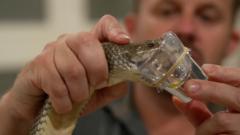
With bright pink tweezers in hand, Emma Teni expertly extracts venom from a Sydney funnel-web spider, showcasing an extraordinary effort to combat one of the world’s most lethal threats. Known for their deadly bite, these spiders have played a pivotal role in an antivenom program that has not recorded a single fatality since its inception in 1981. Teni operates in a specialized milking room, where she carefully handles these venomous creatures, emphasizing both their dangers and their potential to save lives. Working in tandem with community efforts, her team collects spiders handed in by the public, all while ensuring people understand the importance of capturing rather than killing the arachnids. Handyman Charlie Simpson recently faced his spider fears head-on by capturing two funnel-webs during his gardening activities. After dropping off one of the spiders at the vet, he noted the irony of overcoming his fear by helping contribute to life-saving medical efforts. Emma explains that these spiders produce venom far more toxic than their female counterparts and undergo a meticulous milking process—requiring hundreds to fill a single vial of antivenom. The venom collected is vital for the extraction of antibodies needed to create life-saving treatments.Beyond spiders, the Australian Reptile Park has been integral in venom extraction from snakes, like the King Brown. With venom capable of causing multiple deaths, these animals are carefully managed and milked to supply valuable bio-material for antivenom development.Through this robust antivenom program, Australia has maintained an astonishingly low number of fatalities from venomous bites, thanks to the hard work of dedicated staff ensuring venom is available for antivenom production. The antivenom is distributed both locally and internationally, assisting in places like Papua New Guinea, a country with high snake bite incidences.This life-saving operation demonstrates how Australia's most dangerous creatures can serve a dual purpose, playing a key role in preventing the very tragedies they once instilled fear of. The ongoing commitment to community participation and innovative medical practices continues to challenge perceptions about these venomous inhabitants, highlighting their importance in preserving lives.