In brief
Israel’s general election concluded with Prime Minister Benjamin Netanyahu’s Likud emerging as the largest single party. However, the early tally shows his coalition falling just short of a 61‑seat majority, while the total number of seats held by Arab‑led parties equals or surpasses previous records. Analysts warn that a final verdict will likely tilt toward the Arab seats, which some right‑wing parties have refused to cooperate with. The outcome will hinge on whether moderate parties can break longstanding taboos to form a coalition that includes Arab representatives amid a highly polarized electorate. Until absentee ballots, especially from soldiers, are counted, no clear winner is visible, and the political bargaining process in Israel’s fragmented parliament remains in full swing.
The Israeli ballot booth was a stage for both triumph and uncertainty. In early vote counts, Benjamin Netanyahu’s Likud party topped the polls, securing the largest single block in the 120‑seat Knesset.
Yet the right‑leaning coalition, even with support from ultra‑nationalist and ultra‑Orthodox parties, sits just shy of the 61 seats needed for a majority. Analysts caution the numbers may shift when the tally is updated to reflect precincts that typically lean right.
Meanwhile, Gadi Eisenkot’s Yesh Atid, the former army chief turned opposition leader, is fighting to push his platform to the front, but he faces the same hurdle: without Arab representation in Parliament, his bloc remains a minority.
The vote for Arab‑led lists reflects a record turnout from Israel’s Palestinian citizens, who form about a fifth of the population. If their seat count equals or exceeds last election’s record, they could become kingmakers—gathering the difference needed for a majority coalition.
Most Jewish parties have publicly signalled reluctance to share power with Arab parties, citing ideological differences. However, the surge in Arab parliamentary seats weakens that stance, opening the door for rare cross‑community deals that could redraw Israel’s political map.
Abundant absentee ballots—mainly military—add a layer of unpredictability. Until the soldier votes are fully counted, the final seat distribution isn’t known, meaning a clear majority may still elude both blocs.
In a midnight address, Netanyahu thanked his supporters, saying the right‑wing bloc held a “decisive majority” among Jews and the faithful of the state, but he stopped short of claiming outright victory. In the same sentence, Eisenkot urged the public to acknowledge that the coalition “has lost the people’s trust.”
The political scene moves like a chessboard. Analysts, journalists and party leaders are already drafting strategies: whether to coax Arab parties into a partnership, whether to offer ministers or policy concessions, and how to break entrenched partisan silos.
If a majority cannot be assembled within six weeks, Israel’s president will allow other parties a chance. Should all attempts fail, the inevitable next step is a repeat of the election cycle.
Until then, Netanyahu’s Likud remains on a caretaker footing, wielding limited power as Parliament’s new composition is formalised.
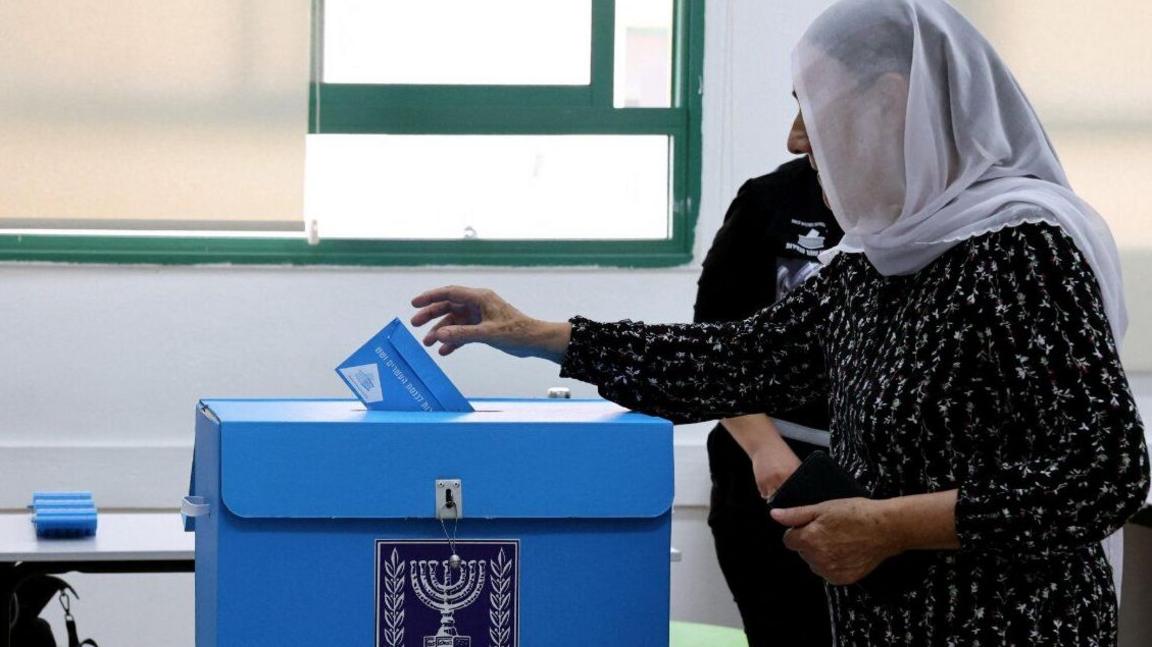
Photo: A woman wearing a headscarf puts a ballot in a ballot box in Israel’s general election, 27/1026. (Reuters)