In brief
Basecamp Research claims its DNA archive could out‑drive the internet, but a recent clash between mathematicians over an AI‑claimed Navier–Stokes solution has spotlighted the risks of relying on generative models for evidence. AI tools like AlphaFold and DeepMind’s crystal‑structure generator have already pushed scientific limits, yet concerns grow over AI‑generated citations, fabricated papers and the potential loss of human judgment in peer review. Publishers now warn of a flood of ‘AI slop’ and strengthen gates, but the debate remains: can AI truly replace rigorous human scrutiny, or does it threaten the very foundations of research?
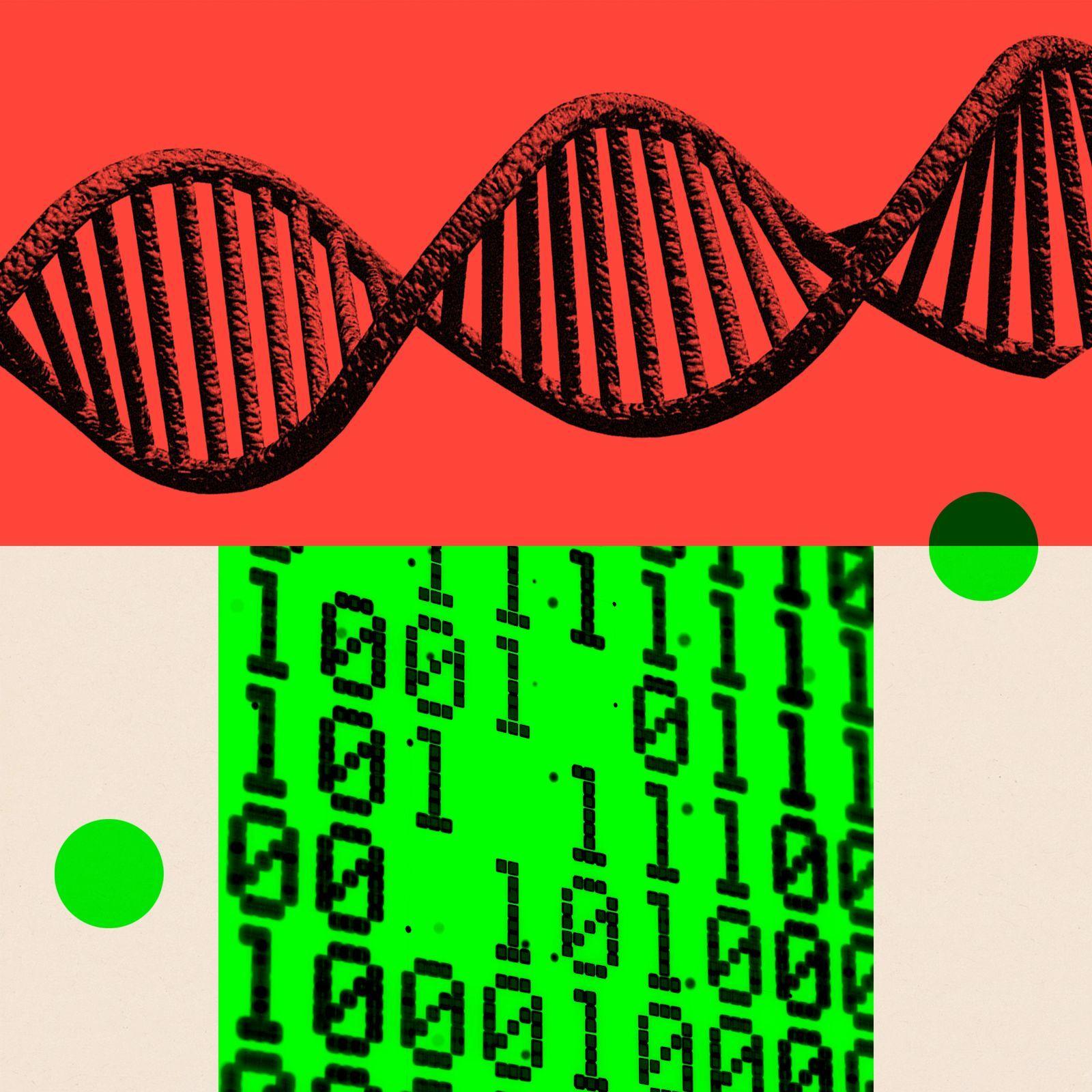
In a quiet warehouse in central London, white‑capped freezers hum while glass tubes sit in bright boxes, each holding a strand of DNA that could hold ten times more data than all text on the internet. Dr Oliver Vince, the co‑founder of Basecamp Research, believes that an AI trained on this wealth of genetic information could finally “speak the language of biology” and unlock cures for disease.
This vision for a biology‑driven AI clashes with a very different dispute that just gained the spotlight: the mathematicians who say an AI model from OpenAI may have solved the infamous Navier–Stokes equations—a problem that has stumped scientists for over a century. Tristan Buckmaster of New York University and Levent Alpöge of Anthropic claim that their independent work was leaked into OpenAI’s tools, a claim denied by OpenAI but left the scientific community wary.
Whichever side of the debate scientists sit, the broader implication is clear: generative AI is increasingly participating in the creation of research itself. DeepMind’s AlphaFold predicted the three‑dimensional shapes of 200 million proteins in a year, a task that would have taken decades in the lab, and its crystal-structure model recently claimed to produce two million new materials. However, chemists from the University of California challenged the novelty of those structures, suggesting that AI may overstate its discoveries.
Even the traditional scaffolding of science—peer review, citation networks, and publication—faces new threats. A Stanford study found that up to 17% of reviewer comments at major computer science conferences may have been rewritten by AI. Cornell researchers uncovered 147,000 phantom citations in recent biomedical papers, raising doubts about the reliability of the literature.
Publishers are scrambling to respond. Elsevier has created a set of over a hundred signals that flag AI‑generated content for closer human inspection. Nature journals have banned AI‑generated images, and arXiv now suspends users who supply fabricated references. Yet the profession still questions the delicate balance between harnessing AI’s power and preserving the human judgment that science depends on.
Some researchers remain hopeful. Prof Andrea Pauli’s decade‑long work on sperm‑egg interaction was aided by AI‑searches that identified a key protein on zebrafish eggs, demonstrating real gains from responsible use. Meanwhile, Dr Vince speaks of a “technically feasible path to curing cancer,” even as he acknowledges that AI’s success is not guaranteed.
As AI systems grow more capable, the community must confront a key question: will these tools expand the frontiers of knowledge or erode the trust on which scientific advancement rests? The answer will shape the future of research, funding, and the very definition of discovery.