In brief
Nebraska’s cattle producers are grappling with an avalanche of expenses—from record‑high steel and diesel to the fallout of tariffs and a recent surge in foreign beef imports. Yvette Mannon, a long‑time rancher, recounts how a wildfire and costly fence repairs strained her finances. While some farmers remain loyal to Trump’s brand of “Make America Great Again,” others question whether the administration’s interventions—such as the 2026 foreign beef import announcement—have ultimately harmed the industry. In the lead‑up to the 2026 midterms, local farms show a mixture of resilience and political reevaluation as costs hit deep into the bottom line.
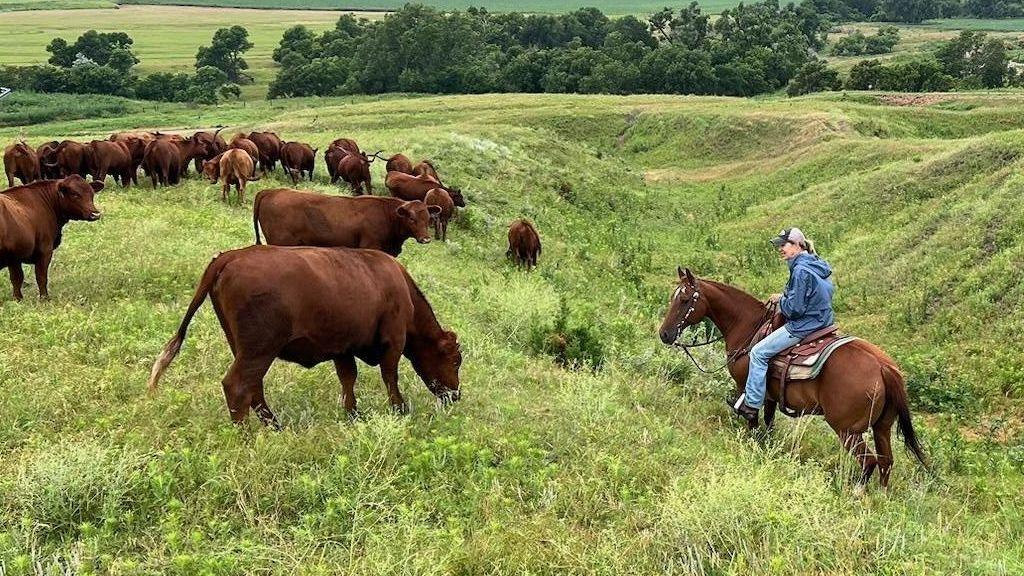
In Nebraska, where rolling green hills stretch under Midwestern skies, cattle ranchers are facing a perfect storm of rising costs and political uncertainty.
Rancher Yvette Mannon, who bought her 300‑head herd in 2002, had already endured a destructive wildfire in April that consumed 1,600 acres and 13 miles of fence. Replacing the fence cost more than $300,000—steel was priced at $4.89 a foot, the highest in years thanks to tariffs imposed by former President Donald Trump.
The problem worsened when the Trump administration announced in August that it would import 300,000 metric tons of duty‑free foreign beef, a move that crimped domestic prices as the market opened the September‑November weaning window. The result was a sharp drop in cattle prices, squeezing farmers’ margins.
Cost pressures are compounded by a 40‑plus‑percent jump in diesel driven by the Iran War, higher fertilizer prices, and increased costs for feed and equipment. “It felt like a betrayal,” Mannon said, citing the “Buy American” slogan that seemed to have backfired on her front door.
Not all local farmers see the same picture. Jake Wolfinger of the Wolfinger feedlot near Lexington, in a home where Trump banners flutter outside, explains that the administration’s rhetoric often feels "shoot‑fire‑aim", and he hopes the president will focus more on the country’s needs than on symbolic gestures.
Other residents, like Duane Kimball in Callaway, acknowledge the rising cost of machinery and regulations but refrain from pointing the finger at the president as the primary cause of their financial strain. His banded grin masks the weight of increasing diesel bills that force him into tighter credit lines.
Across the state, a patchwork of votes shows a shift in political allegiance. While the last election saw a landslide for Trump supporters in Nebraska, the midterms are proving a litmus test for rural voters; independent Senator Dan Osborn is gaining traction against GOP nominee Pete Ricketts, as farmers weigh the impact of federal policies versus personal freedoms.
Even so, there is still a prevailing sense of resilience. Yvette Mannon notes that “people in agriculture are eternal optimists”; her philosophy is to keep steady hands on the reins amid the storm of uncertainty.