In brief
Tensions in the Gulf region, exacerbated by the conflict involving Iran, are forcing migrant workers from Asia, especially from the Philippines and Bangladesh, to evaluate the risks of their jobs against the necessity of their income. With escalating violence and recent fatalities in the workplace, many are left to reconsider their future as they navigate the perilous landscape of a war zone while striving to support their families back home.
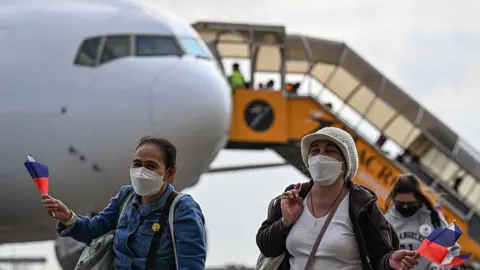
The ongoing conflict in the Gulf, primarily linked to the military tensions involving Iran, has put many migrant workers in a precarious position, forcing them to choose between economic stability and personal safety. Norma Tactacon, a 49-year-old domestic worker from the Philippines, finds herself in Qatar amidst missile threats, praying for her family's safety while considering her future. With Gulf states increasingly becoming targets due to their ties to the US, many migrants question whether the financial benefits of working in the region are worth the mounting dangers.Tactacon has dedicated nearly two decades to working as a maid across various Middle Eastern countries, sending money home to support her children's education. Despite reassurances from employers and the relatively high salaries compared to her homeland, she expresses the fear of returning home, leaving her family vulnerable. As the conflict evolves, migrant workers are left in anguish, navigating an environment fraught with risk, yet compelled by financial obligations.Additionally, the International Labour Organisation highlights that the region accommodates 24 million workers, who are now at heightened risk as violence escalates. Reports indicate that several have already lost their lives in the conflict. Abdul Haque, whose father Ahmad died in an incident during Ramadan, reflects on the changing perception of safety in the Gulf among families of migrant workers.Governments across Asia are struggling to bring their citizens home, but logistical challenges due to active strikes present formidable barriers, resulting in uncertain and extended travel routes back to safety. In the face of adversity, as some contemplate riskier endeavors, others remain hopeful for a return to a peaceful existence. The stories of these migrant workers are a testament to the human resilience amidst chaotic upheaval.