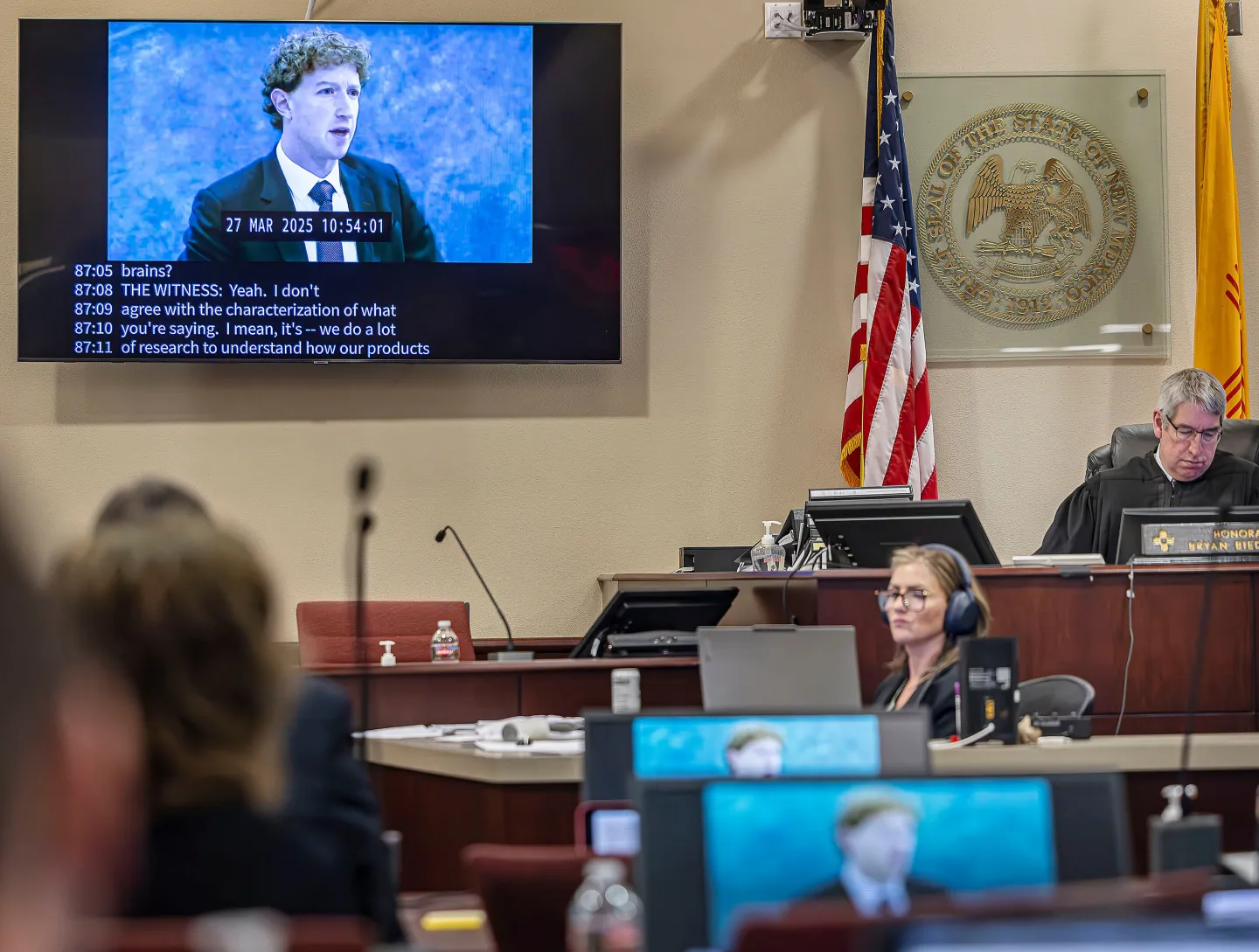
SANTA FE, N.M. (AP) — Closing arguments began Monday in a landmark trial in New Mexico where social media conglomerate Meta is accused of misleading its users about how safe its platforms are for children.
Jurors will take up the case after the arguments and six weeks of testimony from scores of witnesses that included local teachers, psychiatric experts, state investigators, top Meta officials, and whistleblowers who left the company.
The case in New Mexico state court is among the first to reach trial in a wave of litigation involving social media platforms and their impacts on children.
New Mexico prosecutors have accused Meta—owner of Instagram, Facebook, and WhatsApp—of prioritizing profits over safety in violation of state consumer protection laws. They raised concerns about the safety of complex algorithms, various messaging features, and settings.
“It’s clear that young people are spending too much time on Meta’s products; they’ve lost control,” prosecution attorney Linda Singer told the jury in closing statements. “Meta knew that and didn’t disclose it.”
Simultaneously, Singer highlighted how Meta’s algorithms recommended sensational and harmful content to teenagers while failing to properly enforce its minimum user age of 13.
“The safety issues that you’ve heard about in this case weren’t mistakes; they were a product of a corporate philosophy that chose growth and engagement over children’s safety,” Singer stated. “Young people in this state, and around the country, have borne the cost.”
Meta's attorneys dispute these claims, arguing that the company has incorporated protections for teenagers and works to eliminate harmful content, even while acknowledging that some of it slips through their safety measures.
Singer urged jurors to impose a civil penalty exceeding $2 billion against Meta, drawing on violations of consumer protection laws. She claimed that over a decade, the company repeatedly failed to act transparently about the safety of children using its platforms.
A subsequent phase of the trial will determine if Meta created a public nuisance and should be financially responsible for funding programs to address the harms to children.
Attorney General Raúl Torrez filed the suit in 2023, asserting that Meta's platforms serve as a “breeding ground” for predators targeting children for sexual exploitation. State investigations included setting up fake accounts as minors to document online solicitations and Meta’s responses.
Executives from Meta stated that the company continuously seeks to improve safety measures without infringing on free speech.
Prosecutors argue that public assurances of safety from Meta executives often conflict with internal studies and communications. The jury will decide whether Meta violated the state’s Unfair Practices Act, with potential fines running into billions of dollars depending on the jurors' findings.