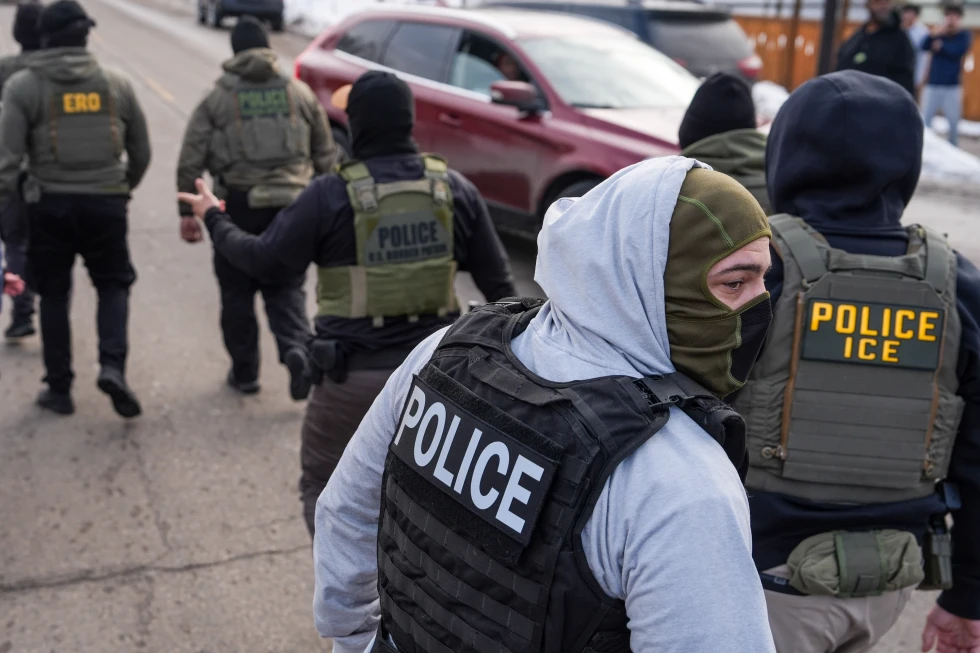
WASHINGTON (AP) — The presence of masked federal officers has sparked a heated debate within Congress regarding immigration enforcement practices as legislators work against a deadline for funding the Department of Homeland Security.
Masked operations, often associated with the Trump administration's hardline stance on immigration, are at the center of fierce discussions about public safety and accountability. Critics argue that masking fosters fear and distrust in communities, undermining the relationship between law enforcement and citizens.
Democrats are rallying around the mantra of cameras on, masks off, demanding that federal agents identify themselves and wear body cameras to ensure transparency during raids and enforcement actions. This call for accountability is seen as a necessary step to build trust among community members.
Experts like Justin Smith of the National Sheriffs’ Association argue that clear visibility is essential for effective communication and fostering comfort within the community. The fear of unidentified officers conducting immigration raids has led to significant public outcry, particularly in the wake of controversial detentions and protests against ICE actions.
As the congressional negotiations continue, the pressure mounts on both sides to find a balance between ensuring the safety of law enforcement and protecting the rights and feelings of the communities they serve.
House Democratic Leader Hakeem Jeffries stated that unmasking federal agents is a hard red line in funding discussions, reflecting a broader shift towards accountability among law enforcement agencies.
Meanwhile, Immigration and Customs Enforcement (ICE) maintains that masking is necessary to protect its officers and their families from potential threats, framing the debate as one of safety versus transparency.
Overall, the masking debate highlights a significant challenge in balancing effective immigration enforcement with community trust and safety, positioning it as a critical issue for lawmakers as they move forward.