In brief
Amidst the increasingly visible presence of federal immigration agents in Minnesota, immigrant families face tough decisions about sending their children to school. While some children like Giancarlo still get to experience school life, many stay home due to fear of detention and the lack of safe transportation. Schools are working hard to support these families, balancing education needs with safety in a turbulent environment.
MINNEAPOLIS (AP) — In some ways, 10-year-old Giancarlo is one of the lucky ones. He still goes to school.
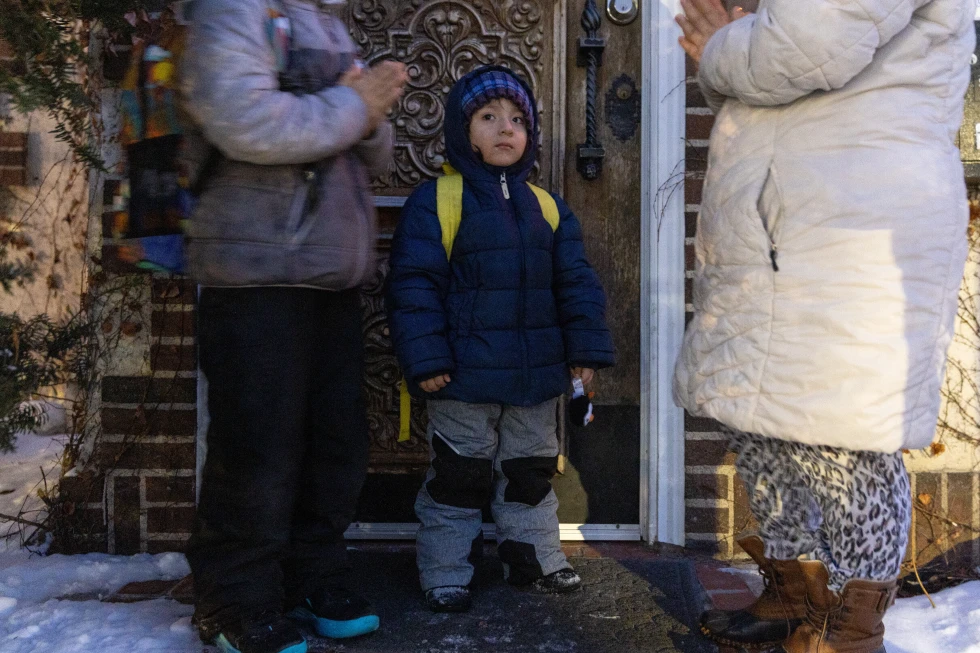
Each morning, he and his family bundle up and leave their Minneapolis apartment to wait for his bus. His little brother hefts on his backpack, even though he stopped going to day care weeks ago because his mom is too afraid to take him.
As they wait behind a wrought-iron fence, Giancarlo’s mother pulls the boys into the shadow of a tree to pray. It’s the only time she stops scanning the street for immigration agents.
“God, please protect my son when he’s not at home,” she says in Spanish. She spoke with The Associated Press on condition of partial anonymity for the family, because she fears being targeted by immigration authorities.
For many immigrant families in Minnesota, sending a child to school requires faith that federal immigration officers deployed around the state won’t detain them. Thousands of children are staying home, often for lack of door-to-door transportation — or simply trust.
Schools, parents, and community groups have mobilized to help students get to class so they can learn, socialize and have steady access to meals. And for those who are still sending their children, the trip to and from school is one of the only risks they’re willing to take.
Giancarlo’s Minneapolis elementary school is the best thing going for him these days. There’s soccer to play at recess, and he has plans to learn the flute next year. His passion shines even brighter in the face of challenges; he saves half the food he gets at school to share with his brother and mother, who are confined to home.
Toward the back of the line, second-grade teacher Jenna Scott chatted with a former student, now a third grader, about safety and school while trying to keep the conversation light.
With as many as 3,000 federal officers roaming the state this year, some immigrant parents are opting to let their children walk or ride school buses with other children rather than risking detention in their own cars, which adds to the growing sense of urgency for change.
“Your only goal is to bring the students home, no matter what you see,” said Rene Argueta, the school’s family liaison who organized these walks home with teachers amidst fears surrounding ICE.
As attendance drops sharply, schools have introduced methods to keep children learning, including options for online education. The situation is delicate, and school officials remain vigilant as they escort children back to safety.