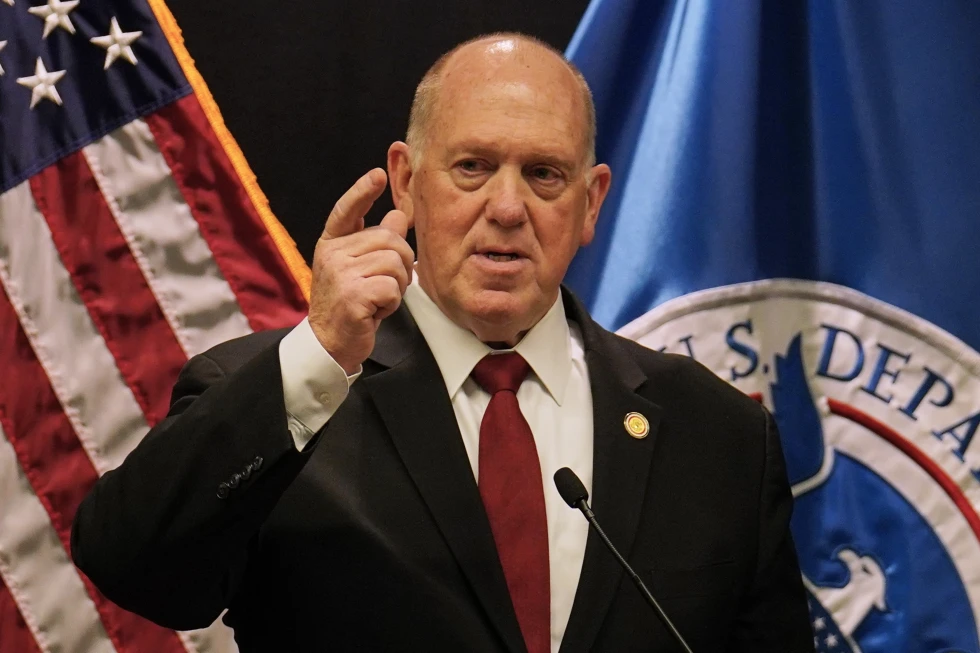
WASHINGTON (AP) — White House border czar Tom Homan’s announcement that enforcement operations in Minnesota are being consolidated under the U.S. Immigration and Customs Enforcement (ICE) follows months of internal disagreements among agencies about how to enforce President Donald Trump’s mass deportation agenda.
Since its creation in 2003, ICE has typically focused on street arrests through targeted operations, actively seeking specific individuals. However, a broader enforcement strategy had emerged under Border Patrol’s influence, leading to clashes over approaches in cities like Los Angeles and Chicago.
The consolidation comes as support for ICE seems to be diminishing, with more Americans expressing concerns about the agency's aggressive tactics. Congressional Democrats are increasingly critical of the Department of Homeland Security, calling for a review of immigration enforcement practices.
Despite views of ICE becoming more negative, Homan emphasized a commitment to streamlining operations and adhering to legal standards while conducting targeted enforcement.
The change, although framed as a success, reflects ongoing internal agency tensions, particularly with the Border Patrol, which had adopted aggressive tactics that some ICE officials view as destabilizing. Former officials have voiced concerns about the Border Patrol's operational style, emphasizing the need for a more investigation-focused approach in alignment with ICE's traditional methods.
Homan stated, 'We’ve established a unified chain of command so that everyone is aware of each other's actions during operations.' This aims to enhance coordination and create a more predictable environment for enforcement.
As ICE takes a more concentrated approach to operations in Minnesota, officials hope to balance public safety concerns with the agency's enforcement objectives amid a politically charged environment.