In brief
A staggering 67,000 sq km of tropical forests were lost last year, largely due to severe fires fueled by climate change. Despite some positive trends in Southeast Asia, experts warn of potential irreversible decline in vital ecosystems.
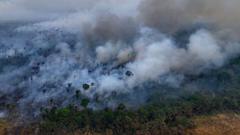
The world’s tropical forests, essential for mitigating climate change, faced their worst destruction last year, according to recent satellite data. Researchers have highlighted that approximately 67,000 sq km (26,000 sq mi) of these invaluable ecosystems were eradicated, a rate comparable to 18 football pitches every minute. The surge in forest loss is primarily attributed to unprecedented fire activity, which has outpaced agricultural land clearances for the first time.The Amazon rainforest, already suffering from extreme drought conditions, was particularly hard hit. As wildfires consumed large swathes of forest, the implications for climate resilience deepened, sparking fears of a catastrophic tipping point for these crucial habitats where irreversible damage might occur."Frightening" is how Professor Matthew Hansen, co-director of the GLAD laboratory at the University of Maryland, described the findings. He warned that parts of the Amazon could transition towards savanna due to ongoing deforestation, a shift that could significantly alter global ecosystems. If climate warming exceeds the 1.5C target set by international agreements, the Amazon may witness catastrophic dieback, endangering countless species and exacerbating climate change as CO2 emissions soar.The situation in the Amazon mirrors broader, concerning trends, as 2023-24 brought about the region's worst drought on record. Fires, often started for agricultural purposes, have surged, propelled by climate change and the natural warming effects of the El Niño weather pattern. As fires rage across Brazil and Bolivia, researchers fear a destructive feedback loop is emerging where more intense fires further degrade forest health.On a brighter note, some progress has been seen in Southeast Asia, where efforts in Indonesia have successfully lowered primary forest loss by 11% compared to the previous year, attributed to stronger policies against land burning. Experts note that political commitment has been crucial for these advancements.While Indonesia's efforts offer a hopeful perspective, the fluctuating outcomes in countries like Brazil underscore the need for consistent and sustainable policies to manage and safeguard valuable ecosystems. As the UN climate summit COP30 approaches, which will be held in the Amazon, discussions on innovative forest preservation strategies are vital, including proposals to financially incentivize nations for maintaining tropical forests rather than exploiting them.