In brief
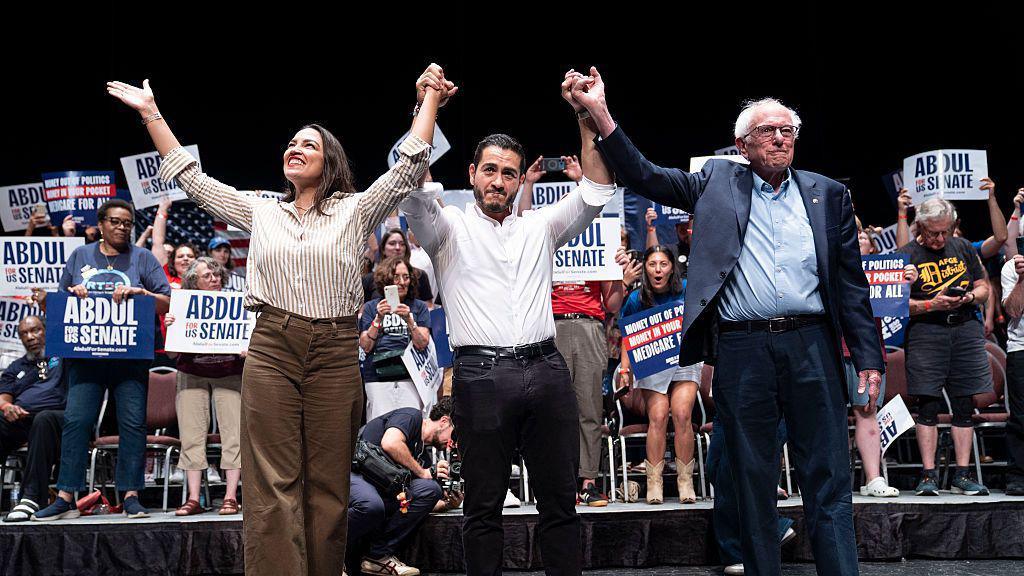
In Detroit’s historic Opera House, Senators Bernie Sanders and Representative Alexandria Ocasio‑Cortez championed Dr. Abdul El‑Sayed’s Senate candidacy, drawing cheers amid a backdrop of Canadian wildfire haze. The race pits the progressive champion against moderate congresswoman Haley Stevens, who enjoys corporate support and a governor’s endorsement. El‑Sayed’s platform—universal healthcare, a wealth tax, and a firm stance on Israel—represents a bold shift for the party, but analysts warn that capturing busy working‑class voters will be difficult. The Democratic coalition must reckon with internal divisions, balancing grassroots energy with the need for electability in swing states such as Michigan. As the primary approaches, the party faces a choice: unify or risk repeating the 2024 losses.
In a Detroit Opera House that has stood since 1921, a swarm of voters gathered under a haze of Canadian wildfire smoke to hear two of the country’s most high‑profile left‑wing voices. Senator Bernie Sanders and Representative Alexandria Ocasio‑Cortez rode the swell of progressive enthusiasm to declare Dr. Abdul El‑Sayed the future of the Democratic Party.
El‑Sayed—an Egyptian‑American physician who champions universal health care, a corporate‑funding ban and a strict anti‑Israel stance—faces a tight contest against incumbent congresswoman Haley Stevens. While Stevens boasts endorsements from Governor Gretchen Whitmer and Senator Gary Peters, and enjoys the financial backing of corporate donors, El‑Sayed’s message encapsulates the policy frictions that have split the party.
The Michigan Senate seat is indispensable. Michigan swung from a Biden victory in 2020 to a Trump win in 2024, making the seat a must‑win if Democrats hope to regain control of Congress. However, the left’s win on the horizon, seen in New York and Colorado primaries, still faces a crucial test: can it win back working‑class voters who historically feel alienated and who have leaned toward Trump?
Local polls point to rising concerns around healthcare, housing, and the cost of living—issues El‑Sayed pledges to tackle. Yet some voters, like 74‑year‑old Colleen Houlihan, argue that progressive zeal will not outpace the need for a candidate who can perform under the pressure of a postseason election. Meanwhile, independent decisives like Cedric Erkins lament the sky‑high living costs and question the utility of foreign spending.
When asked whether the left can draw in moderate Democrats, El‑Sayed emphasized that the party’s future is being built on this very momentum. Political scientist Larry Sabato warns that “both sides” must converge lest the party fracture further.
As the primary draws near, Detroit’s flurry of rallies, chants of “Medicare for All” and calls to end corporate funding illustrate a surging grassroots energy. The real challenge remains: translating that energy into votes across the state’s diverse electorate, and keeping the momentum alive through to the November showdown against GOP challenger Mike Rogers.